
Best Plants for Winter Color and Berries
Discover the best plants for winter color and berries, including winterberry holly, dogwood stems, witch hazel, snowdrops, hellebores, and ornamental bark.
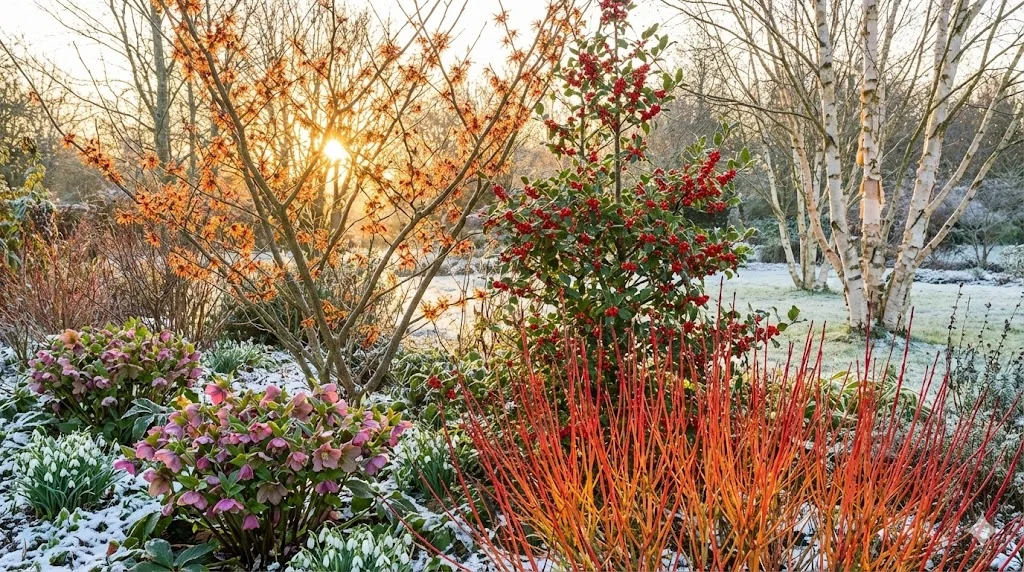
Best Plants for Winter Color and Berries
Winter has a reputation for being the garden's off-season — a grey stretch of bare branches and muddy beds to endure until spring. But this reputation is undeserved. A garden planted with winter colour in mind can be as captivating in January as it is in June, though the beauty is different: subtler, more intimate, and more rewarding for its rarity.
The best plants for winter colour come from four categories: winter-flowering trees and shrubs, colourful bark and stems, berries and fruit, and winter-flowering perennials and bulbs. Together, they create a layered tapestry of colour that carries the garden from November through March — the very months when we need garden beauty most.
Winter-Flowering Trees and Shrubs
These plants earn premium garden space by flowering during the months when nothing else does. Many are also beautifully fragrant, filling cold air with sweet scent that feels almost miraculous.
Hamamelis (Witch Hazel)
Witch hazels are the crown jewels of the winter garden. Their spidery, ribbon-like flowers appear on bare branches from December to February, in shades ranging from pale yellow to deep copper-red. Most are beautifully scented.
- Hamamelis x intermedia 'Jelena' — the finest witch hazel, with large flowers in copper-orange that glow in winter light. Exceptional autumn colour too.
- Hamamelis x intermedia 'Pallida' — soft sulphur-yellow flowers with a sweet, penetrating fragrance. The most strongly scented.
- Hamamelis x intermedia 'Diane' — rich red flowers. Less showy than 'Jelena' but dramatic against a pale background.
- Hamamelis mollis — the Chinese witch hazel. Golden-yellow, richly fragrant flowers.
Design tip: Plant witch hazels where low winter sun can backlight them — the translucent petals glow like stained glass.
Chimonanthus praecox (Wintersweet)
One of the most intensely fragrant winter-flowering shrubs. Waxy, pale yellow flowers with a dark purple centre appear on bare stems from December to February. Plant near a doorway or path where you pass daily.
Viburnum x bodnantense 'Dawn'
Clusters of sweetly scented pink flowers appear from November right through to March, shrugging off frost and snow. One of the most reliable and long-flowering winter shrubs.
Daphne bholua 'Jacqueline Postill'
Evergreen, with clusters of supremely fragrant pink and white flowers from January to March. Plant near a sheltered entrance for daily enjoyment of its extraordinary perfume.
Lonicera x purpusii (Winter Honeysuckle)
Creamy white flowers with a sweet honeysuckle fragrance from December to March. Semi-evergreen and easy to grow. Unremarkable in summer but invaluable in winter.
Prunus x subhirtella 'Autumnalis'
The autumn cherry flowers intermittently from November to March, producing delicate semi-double white or blush-pink flowers during mild spells. Stunning underplanted with snowdrops.
"A single witch hazel can transform a winter garden. Its flowers may be small, but their impact — visual and aromatic — is immense."
Ornamental Bark and Coloured Stems
When leaves fall, bark becomes the dominant visual feature of trees. Plants with ornamental bark provide twelve months of interest, but winter is when they truly command attention.
Outstanding Bark Trees
- Betula utilis var. jacquemontii — the whitest bark of any tree. Dazzling in winter, especially in groups of three or five. Clean bark annually with a soft cloth for maximum brightness.
- Prunus serrula — gleaming, polished mahogany bark that peels in bands. Touch-worthy and beautiful.
- Acer griseum (Paperbark Maple) — cinnamon-coloured bark that peels in translucent sheets. Catches low light beautifully.
- Acer pensylvanicum (Snakebark Maple) — green bark with white vertical stripes. Unusual and eye-catching.
- Betula nigra 'Heritage' — peeling bark in cream, salmon, and cinnamon. Stunning near water.
- Stewartia pseudocamellia — patchwork bark in cream, orange, and grey on mature trunks. A four-season tree.
Coloured-Stem Shrubs
Some shrubs produce brilliantly coloured young stems that are most vivid in winter. The secret is to coppice them (cut back hard to the base) each March, which produces a fresh crop of colourful first-year growth.
- Cornus alba 'Sibirica' — vivid coral-red stems. The classic winter-stem plant.
- Cornus sanguinea 'Midwinter Fire' — stems that grade from golden-yellow at the base through orange to flame-red at the tips. Extraordinary.
- Cornus sericea 'Flaviramea' — bright lime-green stems. Beautiful contrast planted alongside red-stemmed varieties.
- Cornus alba 'Kesselringii' — dark purple-black stems. Dramatic against snow or pale backgrounds.
- Salix alba var. vitellina 'Britzensis' — orange-scarlet willow stems. Fast-growing and vigorous.
- Rubus cockburnianus — ghostly white stems covered in a bloom. Startling against dark evergreen backgrounds.
- Rubus thibetanus — similar white stems with a more arching habit.
Design tip: Plant coloured-stem shrubs in a location where low winter sun can backlight them. The stems become translucent and glow with colour. A mass planting reflected in a still pool creates one of winter's most dramatic garden scenes.
Berries and Fruit
Berries add vital splashes of colour to the winter garden and are essential food for birds during the leanest months. The best berry plants hold their fruit well into winter, resisting bird predation long enough to provide sustained colour.
Red and Orange Berries
- Ilex aquifolium (English Holly) — glossy red berries on female plants. Both a male and female are needed for fruiting. Variegated forms add extra foliage interest.
- Ilex verticillata (Winterberry) — a deciduous holly whose bare branches are laden with vivid red berries. Spectacular in arrangements and in the garden.
- Cotoneaster — arching branches studded with red berries. C. horizontalis is excellent trained against a wall.
- Pyracantha (Firethorn) — masses of red, orange, or yellow berries on thorny, wall-trained plants. Available in all three colours.
- Sorbus (Rowan) — clusters of red, orange, white, or pink berries on graceful small trees.
- Rosa rugosa — large, round, tomato-red hips that persist well into winter.
- Malus (Crabapple) — small fruits in red, orange, or yellow that hang on well after leaf fall. 'Red Sentinel' holds its fruit the longest.
Unusual Berry Colours
- Callicarpa bodinieri var. giraldii 'Profusion' — extraordinary clusters of metallic violet-purple berries. Unlike anything else in the garden.
- Symphoricarpos (Snowberry) — white or pink berries that glow in the winter gloom. Excellent in shade.
- Sorbus cashmiriana — white berries on a small tree with an elegant habit. Birds tend to leave white berries, so they persist longer.
Winter-Flowering Perennials and Bulbs
At ground level, a select group of perennials and bulbs flower through the coldest months, providing close-up beauty for those who venture out into the garden.
Hellebores
Hellebores are the queens of the winter garden. Their nodding, cup-shaped flowers appear from December to March in a range of colours — white, green, pink, plum, spotted, and double.
- Helleborus niger (Christmas Rose) — pure white flowers, often appearing in December.
- Helleborus x hybridus (Lenten Rose) — the most varied group, with flowers in virtually every colour. Plant in drifts beneath deciduous shrubs.
- Helleborus foetidus — architectural, with dark green palmate leaves and clusters of green bell-shaped flowers edged in maroon.
Snowdrops (Galanthus)
Snowdrops are the definitive harbingers of spring, flowering from January in most areas. Plant them "in the green" (while in leaf, after flowering) for best establishment.
- Galanthus nivalis — the common snowdrop. Plant in hundreds for a carpet effect in woodland or under deciduous hedges.
- Galanthus elwesii — larger flowers on taller stems. Bold and vigorous.
Other Winter Bulbs and Perennials
- Cyclamen coum — jewel-like pink, magenta, or white flowers above beautifully patterned leaves from January to March.
- Eranthis hyemalis (Winter Aconite) — bright yellow buttercup-like flowers surrounded by a green ruff. Carpets ground under trees.
- Iris unguicularis — delicate blue or purple flowers that appear from warm, dry spots at the base of south-facing walls from November onwards.
- Crocus tommasinianus — among the earliest crocuses, with slender purple flowers from late January.
"The winter garden is not about abundance — it is about treasures. Each flower, each berry, each moment of colour is precious."
Designing a Winter Colour Border
Here is a planting combination designed to provide continuous colour from November to March in a border approximately 4 metres wide and 2.5 metres deep:
Backdrop: Three Betula utilis var. jacquemontii (white-barked birch — multi-stemmed for maximum bark visibility)
Tall layer: One Hamamelis x intermedia 'Jelena' + one Viburnum x bodnantense 'Dawn'
Mid layer: Five Cornus alba 'Sibirica' + three Cornus sanguinea 'Midwinter Fire' + one Mahonia x media 'Winter Sun'
Low layer: A drift of seven Helleborus x hybridus + ten Galanthus nivalis + ten Cyclamen coum + five Carex oshimensis 'Evergold'
This combination delivers white bark (birch), copper-orange flowers and fragrance (witch hazel), pink fragrant flowers (viburnum), crimson and flame stems (cornus), yellow fragrant flowers and evergreen foliage (mahonia), mixed flowers at ground level (hellebores), snowdrops, cyclamen, and evergreen grass texture (carex). For a deeper exploration of how evergreen structure and architectural plants sustain winter gardens, see our guide on creating winter garden interest with structure and evergreens. When you plan your garden borders visually, you can position these elements for maximum impact from your favourite winter viewpoints.
Getting Started with Winter Colour
Three actions that will immediately improve your garden's winter performance:
- Plant a witch hazel. A single Hamamelis provides colour, fragrance, and a focal point through the darkest months. 'Jelena' is the safest bet.
- Add coloured-stem dogwoods. A group of five or seven Cornus, mixing red ('Sibirica') and flame ('Midwinter Fire'), creates a vivid winter feature. Coppice each March.
- Carpet an area with snowdrops. Plant in the green from February. Within a few years, they will naturalise into a white winter carpet that signals the turning of the year.
Winter colour transforms the relationship between gardener and garden. Instead of turning away from the window, you find yourself drawn to it — searching for the first hellebore, admiring the witch hazel backlit by low sun, watching robins feast on the holly berries. For the full seasonal framework, return to our year-round garden design guide.
Garden Design Team
Expert garden designers sharing tips, inspiration, and practical advice for creating beautiful outdoor spaces.
Explore professional garden design
Gardenly3D is a paid professional garden-design application. See plans for included capabilities and availability.
Join the waitlistRelated articles
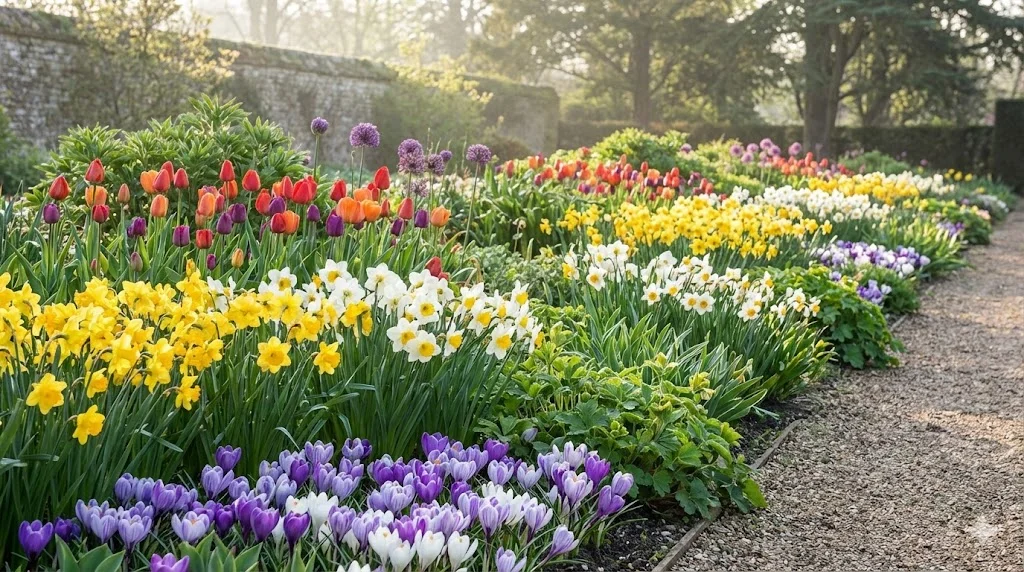
Best Spring Bulbs for Garden Design Impact
Discover the best spring bulbs for garden design impact, from tulips and alliums to layered bulb planting techniques for weeks of spectacular colour.
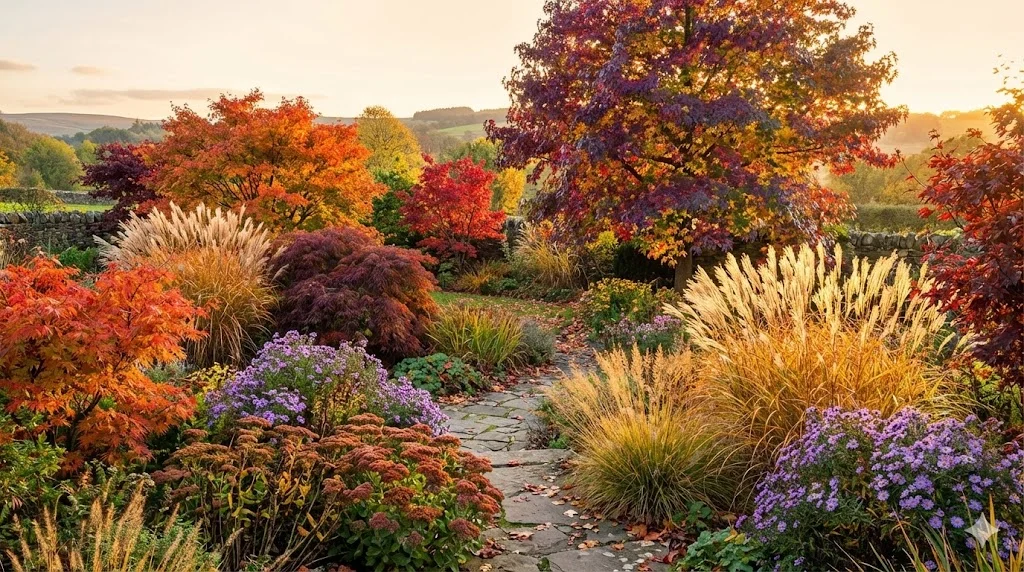
Designing for Autumn Color: Trees, Shrubs, and Perennials
Design for spectacular autumn color with the best trees, shrubs, and perennials for fall foliage including Japanese maples, ornamental grasses, and warm palettes.
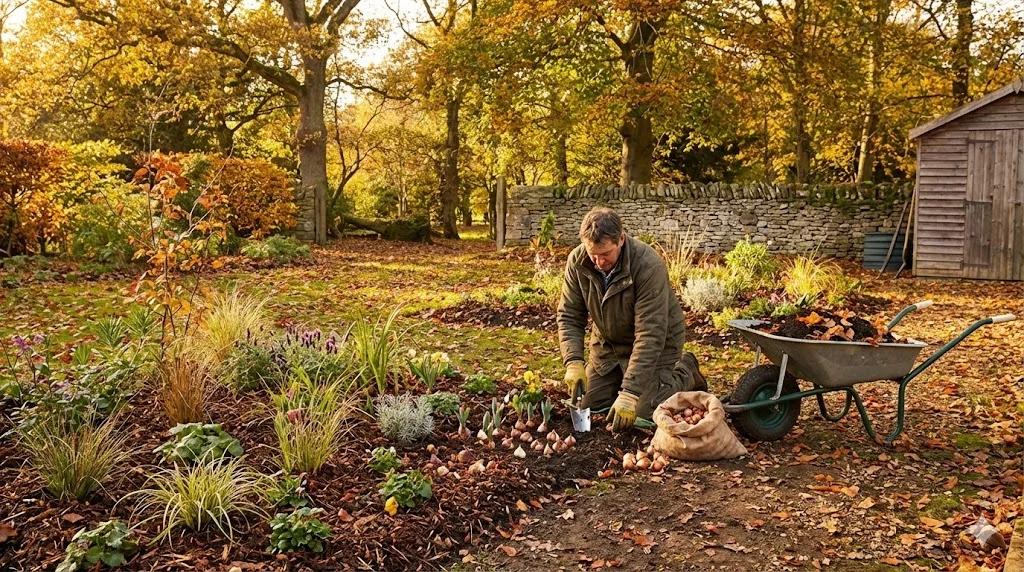
Fall Garden Preparation: Design and Planning for Next Year
Prepare your fall garden with expert advice on autumn planting, bulb installation, design evaluation, soil amendment, and planning for next year.