
Garden Design for Scandinavia
Design a beautiful Scandinavian garden with hardy perennials, winter interest, midnight sun strategies, and plants for extreme northern growing seasons.
Garden Design for Scandinavia
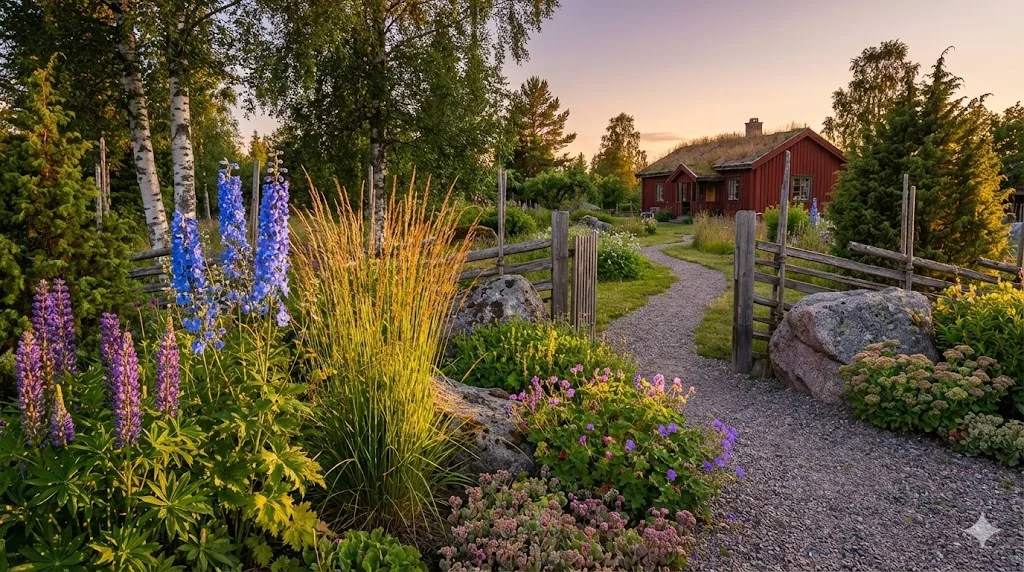
Gardening in Scandinavia — Norway, Sweden, Denmark, Finland, and Iceland — means working with some of the most extreme seasonal contrasts on earth. From the midnight sun of midsummer to the deep darkness of midwinter, from -30 C January nights to the explosive growth of June, the Nordic garden is a study in dramatic transformation. Yet this same extremity produces gardens of remarkable beauty: luminous summer borders that glow in the long evening light, birch groves with white bark catching winter sun, and wild meadows that burst into brief, vivid bloom.
This guide is part of our Garden Design for Your Climate Zone series. It covers the specific strategies, plant choices, and design philosophy that make Scandinavian gardens both resilient and beautiful.
Understanding the Scandinavian Climate
Scandinavia spans a wide climate range, from the relatively mild Danish coast to the subarctic conditions of northern Norway and Finland:
- Denmark and southern Sweden — USDA Zones 7–8. Maritime climate similar to the UK. Mild winters, cool summers. The most forgiving Scandinavian gardening conditions. Gardeners in this zone share a wide plant palette with the UK and northern Europe.
- Central Sweden and Norway (Oslo to Stockholm) — USDA Zones 5–6. Cold winters (-15 to -25 C / 5 to -13 F), warm-enough summers for a broad plant range.
- Northern Scandinavia (above the Arctic Circle) — USDA Zones 2–4. Extreme cold (-30 C to -40 C / -22 to -40 F), very short growing seasons, permafrost in some areas.
- Finnish interior — Continental extremes. Very cold winters, surprisingly warm summers (30 C / 86 F is possible in July).
- Norwegian coast — Warmed by the Gulf Stream. Surprisingly mild winters for the latitude; some coastal areas in western Norway are Zone 8.
Key characteristics across all of Scandinavia:
- Extreme light variation: Above the Arctic Circle, the sun does not set for weeks in summer and does not rise for weeks in winter. Even in southern Scandinavia, midsummer days last 18–19 hours.
- Long winters: 5–8 months of potential snow cover, depending on latitude.
- Short but intense growing seasons: 90–180 frost-free days. The intense summer light drives rapid, concentrated growth.
- Acidic, rocky soils: Glaciation left thin, acidic soils over bedrock across much of the region.
Scandinavian gardeners have a saying: we do not garden for twelve months — we garden for six months and admire the garden's bones for six more. The best Nordic gardens are designed for both halves of this equation.
Designing for the Midnight Sun
The extraordinary summer light of Scandinavia is the Nordic gardener's greatest asset. During June and July, plants receive 16–24 hours of sunlight per day, producing growth rates that can astonish gardeners from lower latitudes.
Exploiting Long Days
- Bold, saturated colors — In the golden, slanting light of Nordic evenings, strong reds, deep blues, and vivid yellows glow with extraordinary intensity. Do not be timid with color.
- Evening garden design — In Scandinavia, summer evenings last until midnight or later. Design seating areas, pathways, and borders that are oriented toward the evening sun.
- Light-catching plants — Ornamental grasses, seed heads, and translucent petals that catch backlight are magical in the low, horizontal Scandinavian summer sun.
- White and pale plantings — In the midnight sun hours, white flowers and pale foliage glow luminously, creating ethereal garden moments.
Fast-Growing Annuals
The short but intense season rewards fast-maturing annuals that fill gaps between perennials:
- Sweet peas — Thrive in cool Nordic summers, bloom prolifically
- Cosmos — Fast from seed, elegant, continuous bloom
- Nasturtium — Edible, vivid, heat-independent
- Calendula — Bright orange and yellow, tolerates cool weather
- Sunflowers — Fast-growing, dramatic, beloved in Scandinavian kitchen gardens
Hardy Perennials for Nordic Gardens
The Scandinavian perennial palette, while more limited than in milder climates, includes many outstanding plants:
Spring (April–May)
- Snowdrops and crocuses — The first signs of life after winter
- Primula — Primroses and cowslips, native to much of Scandinavia
- Pulmonaria (lungwort) — Blue and pink flowers, spotted foliage, Zone 3
- Brunnera (Siberian bugloss) — Forget-me-not-like flowers, heart-shaped leaves, Zone 3
- Tulips — Reliable spring color, especially Darwin hybrids and species tulips
Summer (June–August)
- Delphinium — The signature Nordic border plant. Cool summers produce the tallest, most vivid spires.
- Lupin — Tall spikes in every color, naturalizes dramatically in Nordic conditions.
- Geranium (cranesbill) — Hardy species like G. sanguineum and G. macrorrhizum thrive to Zone 3.
- Peony — Long-lived, fragrant, Zone 3. A cottage garden staple throughout Scandinavia.
- Astilbe — Feathery plumes in shade, pink, red, white, and purple. Zone 3.
- Campanula — Bellflowers in dozens of species, many native to northern Europe. Zone 3.
- Hosta — Shade garden workhorses, slug-resistant varieties preferred.
- Iris sibirica — Elegant, tough, Zone 3.
Late Summer–Fall (August–October)
- Aster — Late-season color, Zone 3
- Sedum — Succulent foliage, flat flower heads, Zone 3
- Rudbeckia — Golden daisies, reliable late-season performer
- Japanese anemone — Pink or white, Zone 5 (southern Scandinavia)
Winter Interest: Designing the Dark Half
With 5–8 months of potential snow cover, winter design in Scandinavia is not optional — it is half the garden year.
Structural Elements
- Evergreen conifers — Spruce, pine, and juniper provide green structure year-round
- Birch groves — White bark catches winter light beautifully. Cluster birches in groups of three or five.
- Ornamental bark — Red-twig dogwood (Cornus sericea), Tibetan cherry (Prunus serrula), and birch
- Dried grasses and seed heads — Leave standing through winter for frost and snow effects
- Garden lighting — In the dark months, thoughtful landscape lighting transforms the garden. Uplighting birch trunks and conifers creates dramatic winter scenes.
- Stone and wood — Natural materials — boulders, wooden fences, log edging — look beautiful under snow
Winter-Flowering Plants
- Witch hazel (Hamamelis) — Fragrant flowers on bare branches, January–March. Zone 5 (sheltered sites in central Scandinavia).
- Winter jasmine (Jasminum nudiflorum) — Yellow flowers in mild spells, Zone 6 (Denmark, southern Sweden).
- Hellebore — Christmas rose blooms in February–March in southern Scandinavia. Zone 4.
- Snowdrops — The earliest sign of spring, often blooming through snow.
When you plan your garden's winter structure and lighting, you can see how evergreens, bark, and hardscape features will look during the darkest months.
The Scandinavian Kitchen Garden
The kitchen garden — köksträdgård (Swedish), kjøkkenhage (Norwegian), køkkenhave (Danish) — is central to Scandinavian garden culture. Growing food connects Nordic gardeners to the brief but productive summer season:
- Cold-hardy vegetables: Potatoes, root vegetables (carrot, beet, turnip, parsnip), cabbages, kale, peas, broad beans
- Berries: Strawberries, raspberries, blackcurrants, redcurrants, gooseberries, lingonberries, cloudberries (north)
- Herbs: Dill, chives, parsley, lovage — all thrive in Nordic conditions
- Rhubarb — The Scandinavian kitchen garden classic, Zone 2, productive and ornamental
- Apple trees — Hardy varieties developed for Nordic conditions produce excellent fruit
The Nordic Naturalistic Style
Scandinavia has contributed significantly to the contemporary naturalistic garden movement, inspired by the region's wild meadows, forests, and coastal landscapes:
- Meadow planting — Wildflower and grass mixtures that mimic native Nordic meadows
- Minimal intervention — Allowing plants to self-seed, spread, and interact naturally
- Native plant focus — Birch, rowan, juniper, heather, bilberry, and native wildflowers
- Seasonal acceptance — Embracing the full cycle of growth, bloom, seed, dormancy, and snow
The Scandinavian approach to garden design reflects Nordic design philosophy more broadly: simplicity, functionality, connection to nature, and an appreciation for materials in their honest state.
Practical Challenges and Solutions
- Frost heave — Repeated freezing and thawing pushes shallow-rooted plants out of the soil. Mulch heavily in late fall and choose deep-rooted species. Many of these same winter survival strategies are shared with cold climate gardens in USDA Zones 3-5.
- Short planting window — Plant in late spring (May–June) or early fall (August–September). Avoid planting in midsummer heat or late fall cold.
- Deer and moose — A significant challenge in many areas. Use deer-resistant plants and fencing.
- Heavy snow — Choose plants with flexible stems that bend rather than break. Avoid broad, flat-topped shrubs.
- Slug pressure — High humidity and cool temperatures favor slugs. Use iron phosphate bait, copper barriers, and choose resistant plants.
Getting Started: Your Scandinavian Garden Plan
- Design for both halves of the year — Plan summer exuberance and winter structure with equal care.
- Start with trees and structure — Birch groves, conifers, and stone features are the backbone.
- Choose proven hardy plants — Zone ratings are your first filter. Local garden centers and botanical gardens are your best guides to what thrives in your specific conditions.
- Embrace the light — Orient borders and seating toward the evening sun. Use plants that catch and glow in low-angle light.
- Include a kitchen garden — The connection between garden and table is central to Scandinavian culture.
- Add winter lighting — Landscape lighting extends garden enjoyment into the dark months.
- Mulch and protect — Deep mulch in fall protects roots and moderates frost heave.
- Celebrate the seasons — A Scandinavian garden is a garden of transformation. Embrace each phase — the first snowdrop, the midsummer midnight sun, the golden fall, the silent winter snow — as a distinct and beautiful moment.
The Scandinavian garden is proof that harsh conditions do not preclude beauty — they concentrate it. The intensity of a Nordic summer, the drama of winter light on snow, and the simple pleasure of harvesting berries under the midnight sun create garden experiences that are uniquely powerful and deeply connected to place.
Garden Design Team
Expert garden designers sharing tips, inspiration, and practical advice for creating beautiful outdoor spaces.
Explore professional garden design
Gardenly3D is a paid professional garden-design application. See plans for included capabilities and availability.
Join the waitlistRelated articles
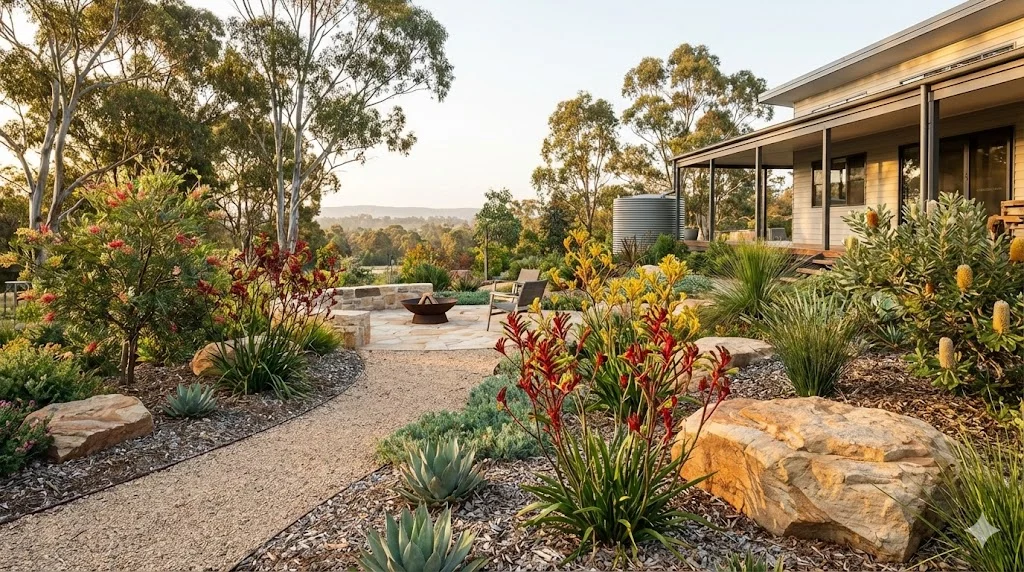
Garden Design for Australian Conditions
Design a resilient Australian garden with native plants, bushfire-safe landscaping, water-wise strategies, and solutions for subtropical to arid climates.
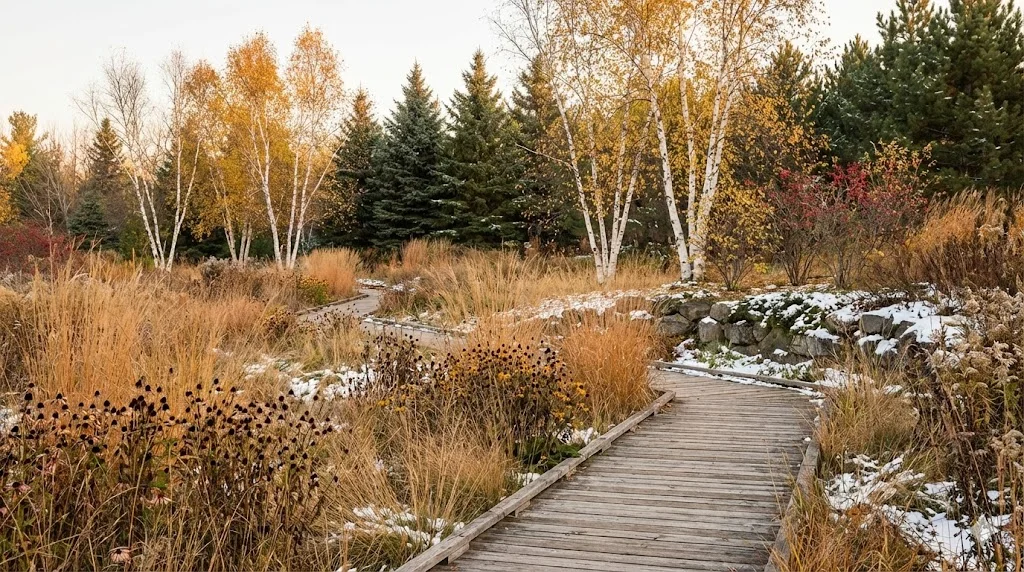
Garden Design for Canada
Design a resilient Canadian garden with extreme cold strategies, native prairie and boreal plants, short season planting, and wildlife-friendly garden design.
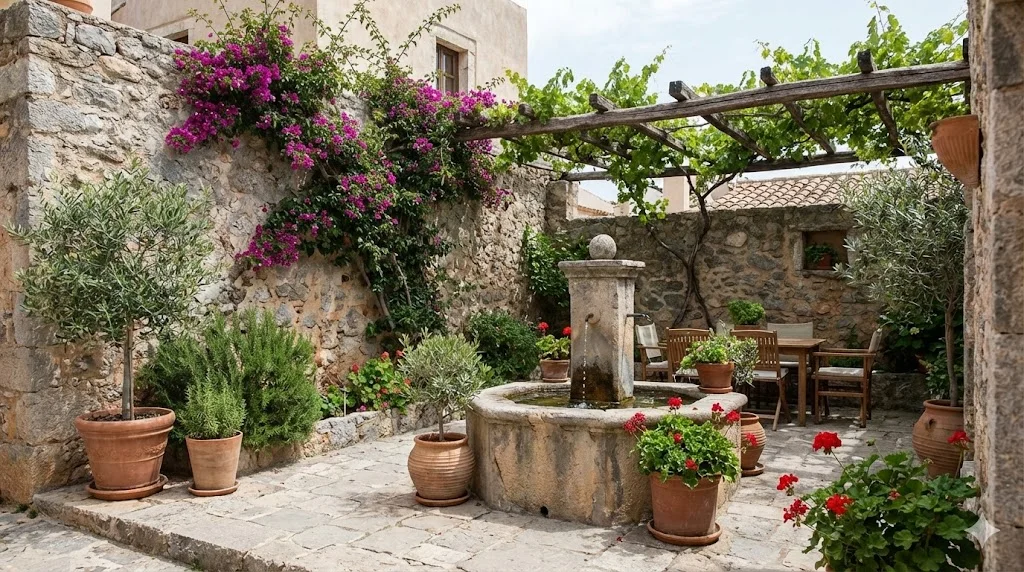
Garden Design for Coastal Mediterranean (Spain, Italy, Greece)
Design a stunning coastal Mediterranean garden with bougainvillea, citrus, courtyards, dry stone walls, and irrigation strategies for Spain, Italy, and Greece.