
How to Plan Garden Irrigation: Sprinklers, Drip, and Zones
Plan your garden irrigation system with this guide to sprinkler types, drip irrigation, zoning strategies, water pressure, and smart controllers.
How to Plan Garden Irrigation: Sprinklers, Drip, and Zones
Water is the lifeblood of a garden, and how you deliver it determines whether your plants thrive or merely survive. Hand-watering with a hose is fine for a few pots on a balcony, but for any garden with beds, borders, and lawn, a planned irrigation system saves time, conserves water, and produces healthier plants. The difference between a garden that is watered well and one that is watered badly shows up in every leaf, flower, and fruit.
Planning irrigation is not glamorous, but it is one of the smartest investments you can make in your garden. And the best time to plan is before you build -- laying pipes under paths and through beds is easy during construction and painful afterward. This guide covers the types of irrigation, how to zone your garden, and how to size and control your system. For the complete garden design process, see our beginner's guide to designing a garden from scratch.
Why Planned Irrigation Beats Hand-Watering
Hand-watering seems simple, but it has serious drawbacks:
- Inconsistency: You water when you remember, not when the plants need it. Some areas get too much, others too little.
- Surface watering: A quick pass with a hose wets the top inch of soil and evaporates quickly. Roots stay shallow.
- Time: Properly hand-watering a medium-sized garden takes 30-45 minutes. Every day in summer. For months.
- Holiday problem: When you go on holiday, the garden suffers unless you recruit a dedicated neighbor.
A planned irrigation system delivers the right amount of water to the right place at the right time, automatically. Plants grow deeper roots, use water more efficiently, and suffer less stress.
Types of Irrigation
Drip Irrigation
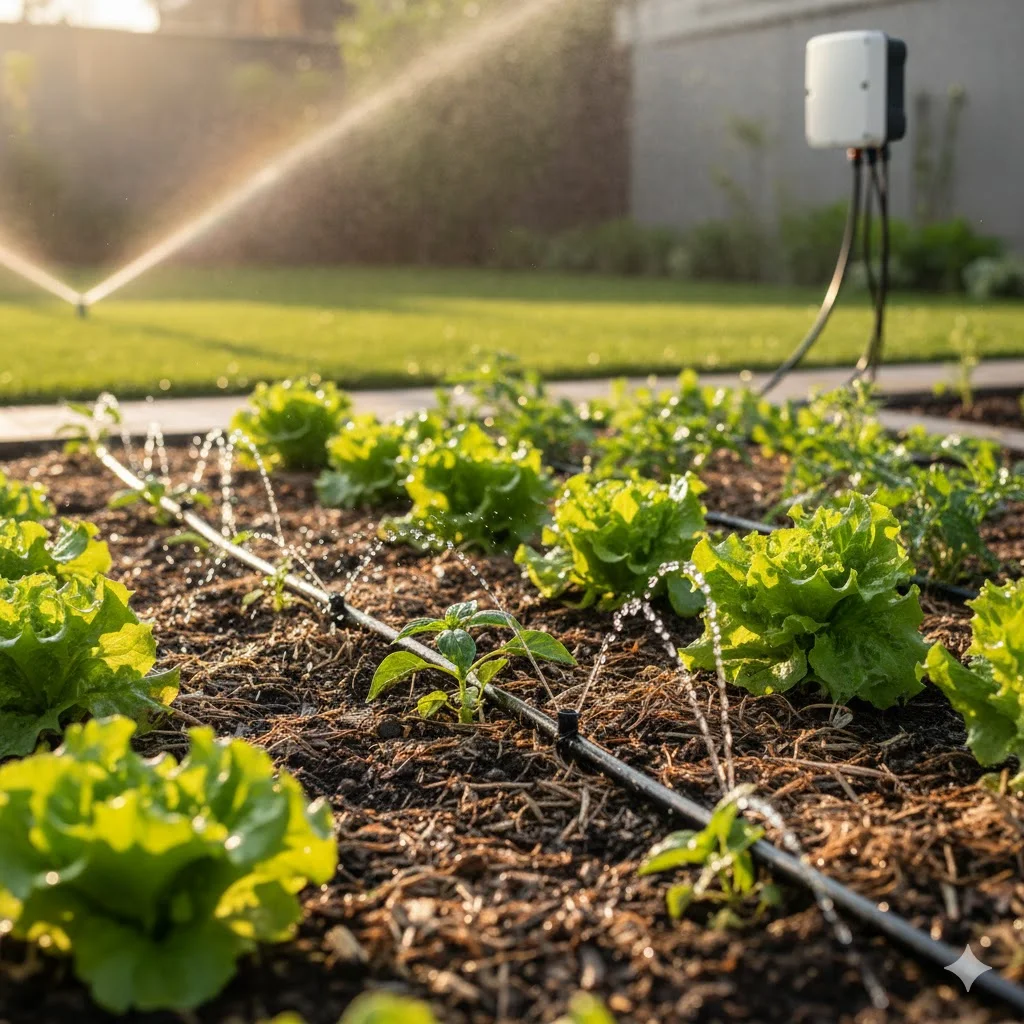
Drip systems deliver water slowly and directly to the root zone of each plant through narrow emitter tubes or individual drip points. They are the most water-efficient irrigation method, losing almost nothing to evaporation or runoff.
Best for: Flower beds, borders, vegetable gardens, raised beds, container plantings, hedges
Key benefits:
- Uses 30-50% less water than sprinklers
- Keeps foliage dry, reducing fungal disease
- Works at low water pressure
- Can be customized to give each plant exactly the water it needs
Typical components: Main supply line, distribution tubing (13 mm / 1/2 inch), drip emitters or soaker hose, pressure regulator, filter, timer
Sprinkler Systems
Sprinklers throw water over a wide area, mimicking rainfall. Pop-up sprinklers are installed flush with the lawn surface and rise when activated. Fixed sprinklers sit above ground on risers.
Best for: Lawns, large open areas, new turf establishment
Key benefits:
- Cover large areas efficiently
- Pop-up types are invisible when not in use
- Well-established technology with reliable components
Drawbacks:
- Higher water use than drip (evaporation and overspray)
- Wet foliage can promote disease in beds
- Require higher water pressure than drip systems
- Wind affects spray distribution
Micro-Sprinklers and Micro-Jets
A middle ground between drip and full sprinklers. Small heads on short risers spray water in a small radius (typically 1-3 meters / 3-10 feet). Useful for ground cover, dense planting, and areas where drip emitters would need to be too closely spaced.
Soaker Hoses
Porous hoses that seep water along their entire length. Affordable and simple, but less precise than drip emitters. Useful for long hedge lines, rows of vegetables, and uniform planting beds.
Zoning Your Garden
Different parts of your garden have different water needs. Grouping areas with similar requirements into irrigation zones allows you to water each zone independently with the right frequency and duration.
Typical Zones
| Zone | Description | Water Need | Method |
|---|---|---|---|
| Lawn | Open grass area | High, frequent | Pop-up sprinklers |
| Flower beds | Mixed perennial borders | Medium | Drip irrigation |
| Vegetable garden | Annual crops | High, consistent | Drip irrigation |
| Established shrubs | Mature woody plants | Low, occasional | Drip or none |
| New planting | Recently planted areas | High during establishment | Drip irrigation |
| Containers | Pots and planters | High, daily in summer | Drip with individual emitters |
| Dry garden / xeriscape | Drought-tolerant planting | Very low | None or occasional hand-water |
Zone by water need, not by location. A thirsty vegetable patch next to a drought-tolerant gravel garden should be on different zones even though they are physically adjacent. This prevents overwatering one area to satisfy another.
Hydrozoning Principles
Hydrozoning means grouping plants with similar water requirements together in your garden design. This is ideally done during the design phase:
- Place drought-tolerant plants together in one bed
- Group moisture-loving plants near a water source
- Position lawn (high water demand) separately from dry planting
- Consider slope -- water runs downhill, so irrigate slopes differently from flat areas
If you are still in the planning phase, you can map your irrigation zones onto your garden layout to ensure that each zone is logical and efficient before you install anything.
Sizing Your System
Measure Your Water Supply
Before buying any irrigation components, measure your available water pressure and flow rate:
- Pressure: Use a pressure gauge on your outside tap. Most domestic supplies provide 2-4 bar (30-60 psi). Drip systems need 1-2 bar (15-30 psi). Sprinklers need 2-4 bar (30-60 psi).
- Flow rate: Time how long it takes to fill a 10-liter (2.5-gallon) bucket from your outside tap. Divide to get liters per minute. A typical domestic supply provides 15-25 liters per minute (4-7 gallons per minute).
Calculate Zone Requirements
Each zone requires a certain flow rate:
- Pop-up sprinkler: 5-15 liters per minute (1.5-4 gpm) each, depending on type
- Drip emitter: 2-8 liters per hour (0.5-2 gph) each
- Micro-sprinkler: 20-100 liters per hour (5-26 gph) each
Add up the total flow required for each zone. If a zone requires more flow than your supply provides, split it into two zones that run sequentially.
Pipe Sizing
Use 25 mm (1 inch) main supply pipes for runs longer than 15 meters (50 feet) to minimize pressure loss. Use 13 mm (1/2 inch) distribution pipes for shorter runs and drip systems. A professional irrigation supplier can calculate pipe sizes precisely based on your flow and pressure measurements.
Smart Controllers and Automation
Modern irrigation controllers range from simple battery-powered timers to sophisticated smart systems that adjust watering based on weather data, soil moisture sensors, and evapotranspiration calculations.
Basic Timers
Battery-powered timers attach directly to your outside tap and allow you to set watering schedules. Simple, affordable, and effective for small gardens with one or two zones.
Multi-Zone Controllers
Wired or wireless controllers that manage multiple zones independently. Each zone can have its own schedule, duration, and frequency. Essential for gardens with three or more zones.
Smart Controllers
Wi-Fi-connected controllers that integrate with weather forecasts and soil moisture sensors. They automatically skip watering when rain is forecast, reduce watering during cool periods, and increase during heat waves. The water savings typically pay for the controller within one or two seasons.
Soil Moisture Sensors
Sensors buried in the root zone measure actual soil moisture and report to the controller. This provides the most responsive watering -- the system only runs when the soil actually needs water, regardless of the calendar schedule.
Installation Tips
- Plan before you plant: Install mainline pipes and zone valves before laying paths and planting beds
- Bury pipes below cultivation depth: Main pipes should be 30-40 cm (12-16 inches) deep to avoid damage from digging
- Use drip line above ground in beds: Drip tubes laid on the soil surface (under mulch) are easy to adjust and maintain
- Install a master shut-off valve: Allows you to drain and winterize the system
- Include cleanout points: Filters and flush valves at the end of each drip line prevent clogging
- Label everything: Mark valve locations and zone boundaries on your garden plan
Seasonal Maintenance
- Spring: Turn on the system, check for leaks, clean filters, test all zones
- Summer: Monitor plant health -- adjust schedules if plants show stress
- Autumn: Reduce watering frequency as temperatures cool and rainfall increases
- Winter: Drain the system before the first frost to prevent pipe damage. Disconnect timers and store indoors.
Getting Started
If you are planning a new garden, include irrigation in your design from the beginning. Map your zones, run pipes before you pave, and install drip lines before you mulch. If you are retrofitting an existing garden, start with the zone that needs water most -- usually the vegetable garden or newly planted beds -- and expand from there.
For guidance on designing a garden that minimizes water needs in the first place, see how to plan a low-maintenance garden. For the complete design process, return to our beginner's guide to designing a garden from scratch.
Garden Design Team
Expert garden designers sharing tips, inspiration, and practical advice for creating beautiful outdoor spaces.
Explore professional garden design
Gardenly3D is a paid professional garden-design application. See plans for included capabilities and availability.
Join the waitlistRelated articles
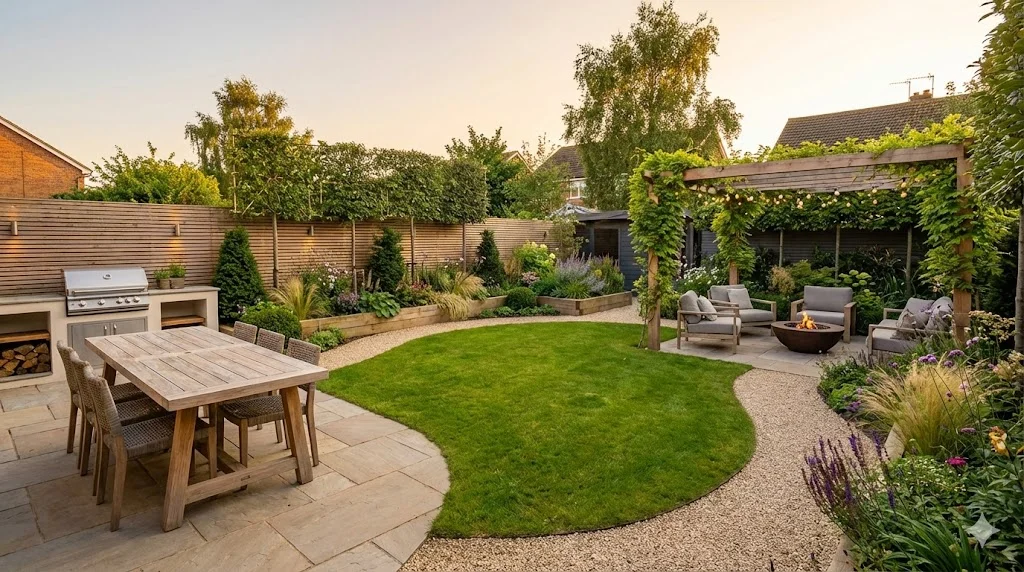
Backyard Garden Design: Creating Your Outdoor Sanctuary
Design a backyard that works as an outdoor living space. Zoning for dining, relaxation, and play, with privacy screening and year-round planting.
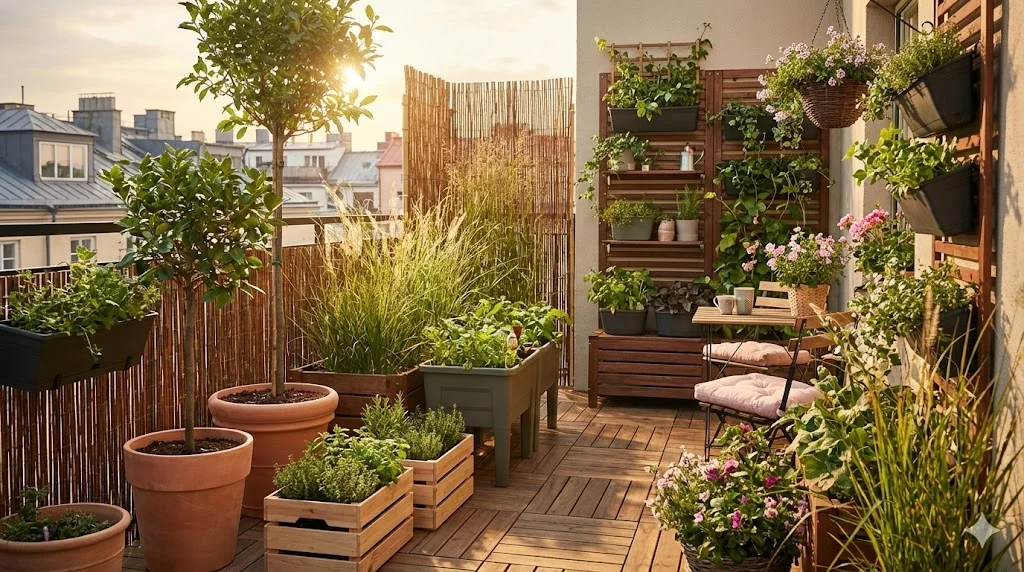
Balcony Garden Design: Growing in Containers
Create a thriving balcony garden with smart container choices, wind-resistant plants, vertical systems, and self-watering solutions for high-rise growing.
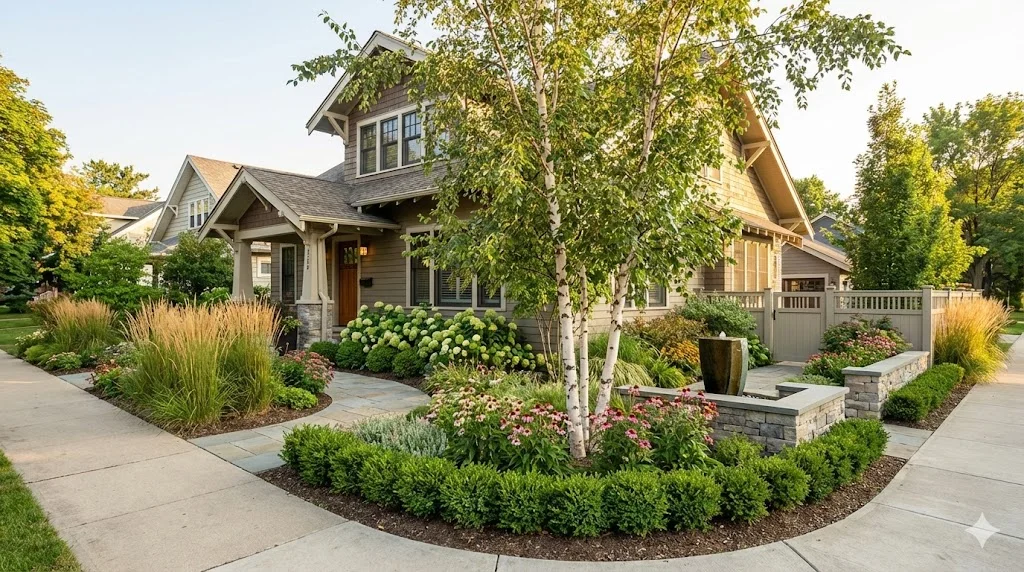
Corner Lot Garden Design: Two-Sided Curb Appeal
Design a corner lot garden that impresses from both streets. Dual frontage planting, visibility sightlines, wraparound beds, and privacy from two directions.