
Rock Garden Design: Alpine and Stone Landscapes
Build a stunning rock garden with alpine plants, natural stone placement, and sharp drainage. A complete guide to creating beautiful alpine and crevice gardens.
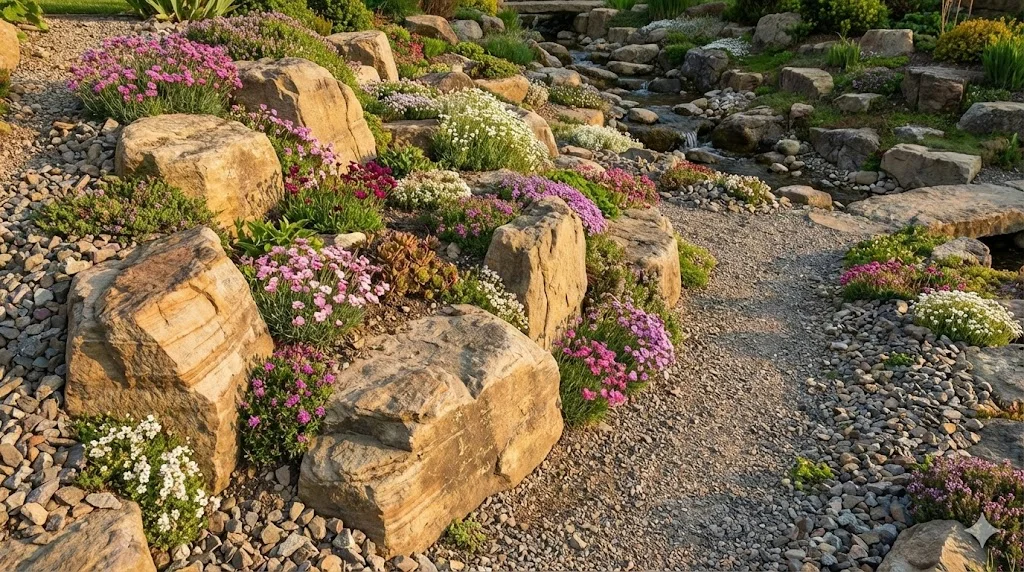
Few garden styles capture the raw beauty of mountain landscapes quite like a well-designed rock garden. By weaving together rugged stone, sharply drained soil, and resilient alpine plants, you can transform even a modest patch of ground into a miniature highland scene that blooms from early spring through late autumn. Whether you have a sun-baked slope begging for purpose or a flat corner that needs dramatic character, rock garden design offers one of the most rewarding ways to garden with nature rather than against it.
What Makes a Great Rock Garden
A rock garden is far more than a pile of stones with a few plants tucked into the gaps. The best examples look as though the earth itself pushed the rock to the surface, with plants colonising every fissure and ledge just as they do on a mountain pass. Three principles separate a convincing alpine garden from a random collection of boulders:
- Naturalistic stone placement. Rocks should appear to belong to the same geological outcrop, with strata lines running in the same direction.
- Perfect drainage. Alpine plants evolved in thin, gritty soils where water never lingers. Replicating that drainage is the single most important technical requirement.
- Scale and proportion. Even a small rock garden needs a sense of depth. Varying stone sizes and planting heights creates the illusion of a larger landscape.
When these three elements work together, the garden feels effortless, as though you simply uncovered what was always there.
Choosing and Placing Stones
Selecting the Right Rock
Stick to one type of stone throughout the garden. Mixing granite with limestone or sandstone with slate creates visual confusion and never looks natural. Local stone is almost always the best choice: it blends with the surrounding landscape, weathers convincingly, and costs less to transport.
Look for stones with interesting textures, weathered faces, and visible strata lines. Avoid perfectly round boulders, which look artificially placed. Flat-topped stones are useful for creating planting ledges, while angular pieces help build convincing crevice gardens.
The Art of Placement
Good rock placement follows a few time-tested guidelines that mimic how stone appears in natural outcrops:
- Bury at least one-third of each stone. A boulder sitting on the soil surface looks like it was dropped from a lorry. Sinking it into the ground gives the impression it has been there for centuries. For larger feature stones, burying up to half the volume creates even more convincing results.
- Tilt stones slightly backward. Angling the face of each rock a few degrees toward the slope channels rainwater back into the soil behind it, directing moisture straight to plant roots. This technique is especially important in crevice gardens where every drop of water counts.
- Use the rule of thirds. Arrange stones in odd-numbered groups of three, five, or seven. Position the largest stone roughly one-third of the way along the bed rather than dead centre. This asymmetry mirrors the way rock naturally erodes and creates a more dynamic composition.
- Align strata lines. If your stone has visible layering, keep those lines running in the same direction and at the same angle across every piece. This single detail does more for realism than any other placement technique.
Take your time during this stage. Moving heavy stones twice is exhausting. Lay them out roughly first, step back frequently, and view the arrangement from every angle, including from inside the house, before backfilling.
Soil Mix for Alpine Plants
Standard garden soil will kill most alpines within a season. These plants need a growing medium that drains almost instantly yet holds just enough moisture to sustain roots between waterings. A reliable recipe for a general alpine soil mix is:
- One part loam-based compost (John Innes No. 1 or similar)
- One part coarse horticultural grit (3-6 mm, not sand)
- One part sharp gravel or perlite
For true high-alpine species like androsace or draba, increase the grit ratio to two parts grit for every one part compost. The goal is a mix that feels gritty and open when you squeeze it, never sticky or dense.
Before filling, ensure the subsoil drains freely. If you are working on heavy clay, excavate at least 30 cm (12 inches) and lay a 10 cm (4 inch) base of coarse rubble or broken stone before adding the alpine mix. On naturally sandy or gravelly ground, minimal preparation is needed.
Crevice Garden Technique
Crevice gardening is a specialised form of rock garden design that replicates the narrow fissures in cliff faces where alpine plants thrive. Thin slabs of stone, typically limestone or sandstone, are set vertically or at steep angles with narrow gaps of 2-5 cm (1-2 inches) between them. These gaps are filled with the alpine soil mix, and plants are inserted as small plugs or seedlings.
Building a Crevice Garden
- Prepare the base. Excavate the area to a depth of 20-30 cm and fill with a drainage layer of coarse gravel.
- Set the first course. Place your largest slabs first, pushing them firmly into the gravel base. Tilt each slab 10-20 degrees off vertical so that water runs down the face and into the root zone.
- Build upward. Stack additional slabs against and between the first course, maintaining consistent gaps. Fill every gap with alpine soil mix as you go, compacting gently with a stick to eliminate air pockets.
- Plant as you build. It is far easier to tuck small plant plugs into crevices during construction than to force them in afterwards. Water each plant in immediately.
Crevice gardens are especially effective for collectors who want to grow a wide range of species in a small area, since each crevice creates its own microclimate with varying aspects and moisture levels. If you are exploring different garden design styles, the crevice technique adds a striking sculptural element that works well alongside more traditional borders.
Scree Beds
A scree bed mimics the loose, gravelly slopes found below mountain cliffs, where broken stone has accumulated over millennia. It is one of the simplest rock garden features to build and is ideal for the widest range of alpine plants.
Creating a Scree Bed
Excavate the bed to 25-30 cm (10-12 inches) deep. Fill the lower half with coarse rubble, broken bricks, or clean builder's aggregate. Top this with a 15 cm layer of scree mix: roughly 80 percent coarse grit or fine gravel and 20 percent loam-based compost. Finish the surface with a 2-3 cm mulch of matching gravel. This top dressing keeps plant crowns dry, suppresses weeds, and looks beautiful.
Scree beds work particularly well on gentle slopes where gravity aids drainage, but they perform just as well on flat ground provided the underlying soil does not hold water. For gardeners interested in low-water landscaping, a scree bed shares many principles with gravel garden design, making it a natural companion planting area.
Essential Alpine Plants
The charm of a rock garden lies in its plants: tough, compact, and often spectacularly floriferous. Here are some of the finest choices for beginners and experienced growers alike.
Saxifrage (Saxifraga)
The quintessential rock garden plant. Encrusted saxifrages form tight silver rosettes studded with arching sprays of white or pink flowers in late spring. Mossy saxifrages prefer a little more moisture and offer vivid colours in shaded crevices. Both types thrive in vertical plantings and narrow gaps between stones.
Sempervivum (Houseleek)
Nearly indestructible, sempervivums form perfect geometric rosettes in shades of green, burgundy, silver, and near-black. They colonise the thinnest pockets of soil, multiply freely, and tolerate full sun and drought with ease. Plant them on ledges, in wall tops, and across scree beds for year-round architectural interest.
Gentian (Gentiana)
For sheer intensity of colour, few plants rival the electric blue trumpets of gentians. Spring-flowering species like Gentiana verna prefer alkaline soil, while autumn-flowering Gentiana sino-ornata demands acid conditions. Check your soil pH before planting and match species accordingly.
Dianthus (Alpine Pinks)
Compact mounds of silver-blue foliage erupt in fragrant pink, white, or crimson flowers from late spring through early summer. Alpine pinks demand sharp drainage and full sun. They are perfect for scree beds and the edges of raised rock gardens, where their sweet clove scent can be enjoyed up close.
Thyme (Thymus)
Creeping thymes are essential ground-cover plants for rock gardens. They carpet bare stone with aromatic foliage, burst into clouds of pink or purple flowers in midsummer, and attract pollinators in abundance. Plant them in wide crevices, between stepping stones, and across the flat tops of boulders.
Aubrieta
A spring stalwart that smothers vertical rock faces and wall tops in sheets of purple, mauve, or rose. Aubrieta is vigorous and easy, making it an excellent choice for beginners. Cut it back hard after flowering to keep growth compact and encourage a second flush.
Building on Slopes vs Flat Sites
Slopes
A natural slope is the ideal starting point for a rock garden. Gravity provides drainage, the angle offers visual drama, and stones can be set into the hillside with minimal excavation. Work from the bottom up, placing the largest boulders first and building in tiers. Leave generous planting pockets between each tier and ensure every stone is firmly bedded so it cannot shift over time.
South and west-facing slopes receive the most sun and warmth, suiting the majority of alpine plants. North-facing slopes stay cooler and moister, opening the door to woodland alpines, ferns, and shade-loving saxifrages.
Flat Sites
A flat garden need not be a disadvantage. Raised rock gardens, built up with imported stone and soil, can look every bit as convincing as a hillside planting. Build the mound with a core of rubble and poor subsoil to improve drainage, then layer the alpine mix and stones over the top. Aim for a naturalistic profile with an off-centre summit and gently sloping sides rather than a symmetrical dome.
Raised beds and berms also improve visibility, bringing tiny alpine flowers closer to eye level. When planning your garden layout, consider placing a raised rock garden where it catches the morning sun and can be viewed from a seating area or kitchen window.
Rock Garden Maintenance
One of the greatest advantages of rock garden design is its low-maintenance nature once established. Still, a few seasonal tasks keep the garden looking its best.
- Weed early and often in the first year. Until plants knit together, gaps in gravel are invitations for annual weeds. Hand-pull them before they seed.
- Top-dress with gravel annually. A fresh 1-2 cm layer of matching grit keeps plant crowns dry, refreshes the surface appearance, and suppresses moss growth.
- Remove dead foliage in early spring. Cut back any winter-damaged growth before the new season's flush. This is also the best time to divide congested sempervivums and replant offsets.
- Water sparingly but deeply. Established alpines rarely need watering except during prolonged drought. When you do water, soak the bed thoroughly and then let it dry completely before watering again.
- Watch for slugs and vine weevil. These are the two most common pests in rock gardens. Evening patrols and biological controls keep them in check without chemicals.
Seasonal Interest
A well-planned rock garden offers something to enjoy in every season:
- Early spring: Saxifrages, aubrieta, and alpine bulbs (crocus, dwarf iris, species tulips) break the winter silence.
- Late spring to early summer: Dianthus, thyme, gentians, and campanulas reach their peak. The garden is at its most colourful.
- Midsummer: Creeping thymes, sedums, and erodiums carry the display through the hottest months.
- Autumn: Late gentians, cyclamen hederifolium, and the changing foliage tones of sempervivums bring warm colour as temperatures drop.
- Winter: Evergreen rosettes of saxifrages and sempervivums, the skeletal forms of stones under frost, and early-flowering Cyclamen coum ensure the garden never feels empty.
Combining Rock Gardens with Water Features
Running water and stone are natural partners. A small stream or rill flowing through or alongside a rock garden adds movement, sound, and a fresh planting opportunity for moisture-loving alpines like primula, dodecatheon, and mimulus.
Keep the scale modest. A thin trickle of water over a few well-placed stones is far more convincing than an oversized waterfall. Use the same stone type as the rest of the rock garden, and bury the liner and pump housing completely so that only natural materials are visible.
A shallow stone basin or tsukubai at the base of a rock garden makes a serene focal point and provides drinking water for birds without the complexity of a full pond.
Bringing Your Rock Garden to Life
Rock garden design rewards patience, observation, and a willingness to learn from the mountains themselves. Start with good stone, prepare your drainage meticulously, and choose plants that genuinely thrive in lean, gritty soil. The result is a garden that feels ancient from its very first season, one that grows more beautiful with every passing year as plants tighten into crevices, stones weather and lichen, and the whole composition settles into something that looks entirely, effortlessly natural.
If you are ready to start sketching out your rock garden, begin with the bones: place your largest stones first, get the drainage right, and let the planting follow. The mountains have been perfecting this art for millennia. All we need to do is pay attention.
Garden Design Team
Expert garden designers sharing tips, inspiration, and practical advice for creating beautiful outdoor spaces.
Explore professional garden design
Gardenly3D is a paid professional garden-design application. See plans for included capabilities and availability.
Join the waitlistRelated articles
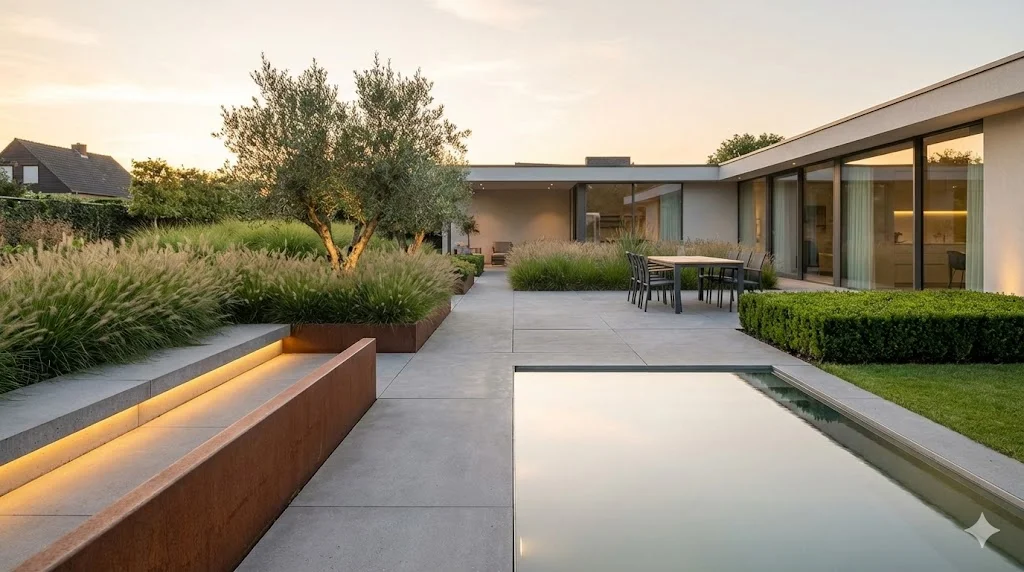
Garden Design Styles: The Complete Guide
Explore every major garden design style from cottage to Japanese, modern to Mediterranean. Find the perfect style for your space, climate, and taste.
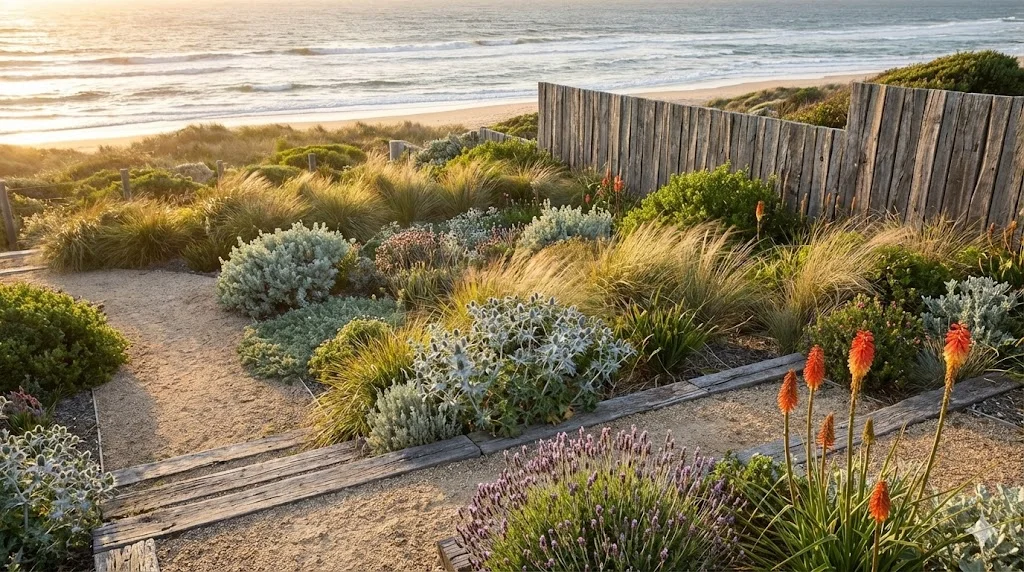
Coastal Garden Design: Salt-Tolerant Beauty
Design a beautiful coastal garden that thrives in salt spray, wind, and sandy soil. Discover the best seaside garden plants and design techniques for exposed sites.
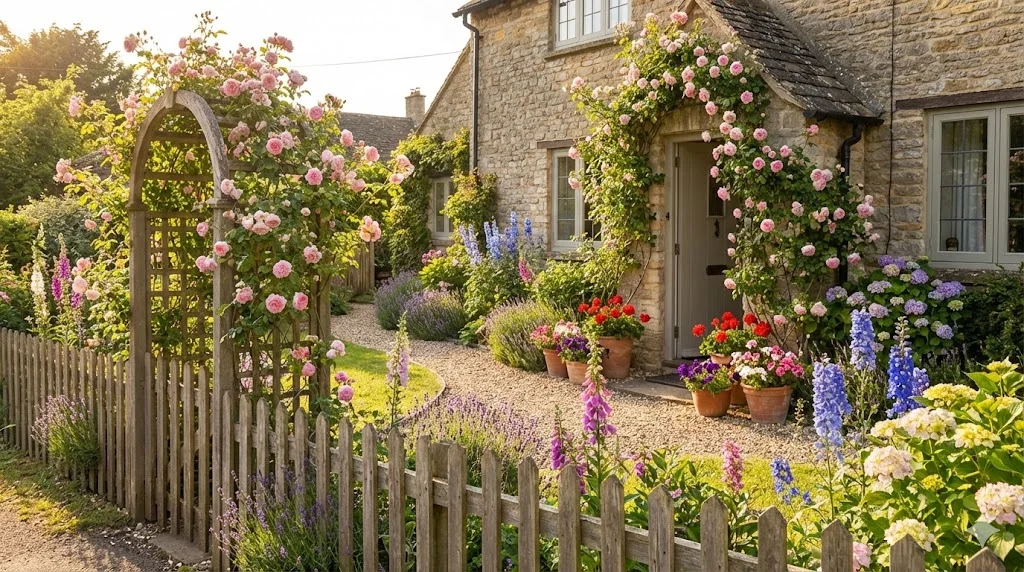
Cottage-Style Front Garden: Welcoming and Colorful
Transform your front garden into a welcoming cottage paradise with climbing roses, flower-lined paths, and seasonal color. Design tips for maximum curb appeal.