
Wildflower Garden Design: Creating a Meadow
Transform your lawn into a stunning wildflower meadow. Learn seed selection, soil preparation, mowing regimes, and how to create biodiversity in your garden.
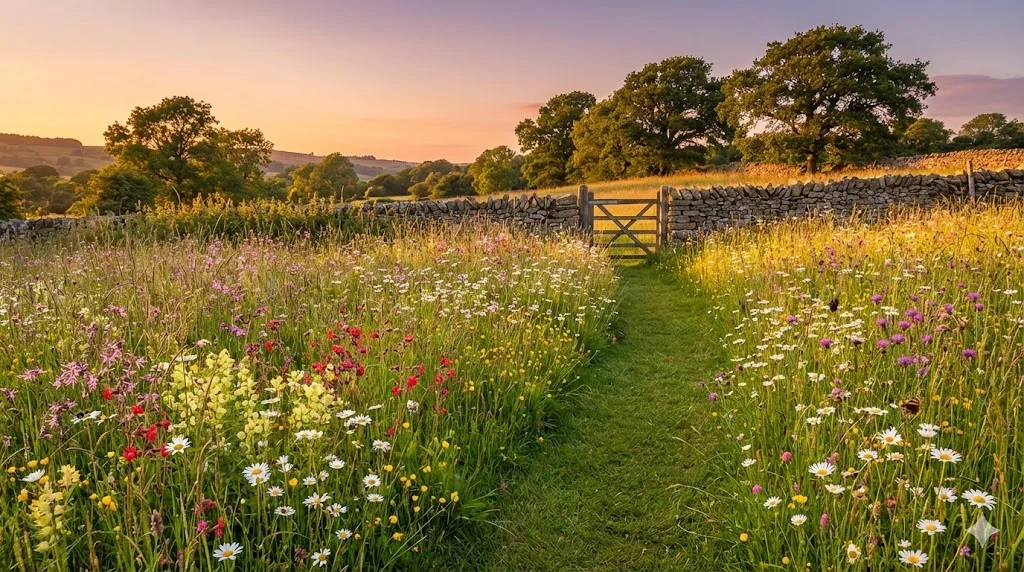
Few things in gardening rival the simple, breathtaking beauty of a wildflower meadow catching the afternoon light. Where a conventional lawn offers a uniform green carpet, a meadow garden design delivers month after month of shifting color, gentle movement, and the constant hum of pollinators going about their work. Whether you have a sprawling rural plot or a modest suburban back garden, replacing even a small area of turf with native wildflowers can transform your outdoor space into something truly alive.
Wildflower meadows are not simply "neglected lawns." They are deliberately designed plant communities that echo the species-rich grasslands that once covered much of the temperate world. Creating one takes patience, a little soil science, and an understanding of how grasses and flowers compete for light and nutrients. The rewards, however, are extraordinary — for you, for visiting wildlife, and for the broader ecosystem your garden sits within.
Why Wildflower Meadows Work
The appeal of a wildflower garden operates on two levels: the ecological and the visual.
Ecological benefits. A single square meter of established meadow can support dozens of plant species, which in turn feed hundreds of insect species. Bees, butterflies, hoverflies, and beetles all depend on the pollen and nectar that wildflowers produce from spring through autumn. Those insects feed birds, bats, and small mammals. In an era of declining biodiversity, even a modest meadow planting becomes a genuine refuge. If you are interested in designing specifically for pollinators, our guide to pollinator garden design for bees and butterflies covers companion strategies that pair beautifully with meadow areas.
Visual benefits. A meadow shifts through the seasons in ways that formal planting rarely achieves. Spring brings cowslips and lady's smock. Early summer delivers ox-eye daisies, buttercups, and red clover. High summer introduces knapweed, field scabious, and wild carrot. Autumn offers devil's-bit scabious and the tawny seedheads of dried grasses. This ever-changing tapestry creates a garden that never feels static, and it does so with remarkably little ongoing labor once established.
Site Preparation: The Foundation of Success
Here is the most counterintuitive lesson in meadow garden design: wildflowers thrive on poor soil. Rich, fertile ground — the kind most gardeners spend years building — heavily favors vigorous grasses that will outcompete delicate wildflowers for light and space. If your soil is nutrient-rich (and most garden soils are), you must reduce its fertility before sowing.
Removing Nutrients
The most effective method is to strip the top 5–10 cm (2–4 inches) of topsoil entirely, exposing the less fertile subsoil beneath. This is labor-intensive but produces the best results. Alternatively, you can grow a succession of heavy-feeding crops (potatoes, brassicas) for one or two seasons without adding any fertilizer, gradually depleting the soil.
A gentler approach is repeated hay-cutting: mow the existing grass frequently through the growing season, always removing the clippings. Over two to three years, this progressively starves the soil of nutrients as they are exported in the cut material.
Scarifying the Surface
Whether you strip topsoil or work with existing ground, the surface must be prepared before sowing. Scarify — scratch and break up — the top centimeter of soil to create a rough tilth with plenty of bare patches. Wildflower seeds need direct contact with mineral soil to germinate reliably. A thick thatch of dead grass will prevent this. On small areas, a spring-tine rake works well. On larger sites, a chain harrow or even a rotovator set shallow will do the job.
Seed Mix Selection: Matching Flowers to Your Soil
Not all wildflower mixes are equal, and the single most important factor in choosing one is your soil type. Sowing a calcareous grassland mix on heavy clay, or an acid-loving mix on chalky ground, will produce disappointing results no matter how well you prepare the site.
Calcareous (Chalky) Soils
Limestone and chalk soils support some of the richest meadow communities in the world. Species such as kidney vetch, horseshoe vetch, wild marjoram, salad burnet, rock-rose, and clustered bellflower all thrive on thin, alkaline ground. These meadows often have the highest species counts per square meter and produce stunning displays of purple, yellow, and white.
Clay Soils
Heavy clay is challenging but by no means impossible. Meadow cranesbill, great burnet, ragged robin, pepper saxifrage, and meadowsweet all tolerate or prefer clay conditions. Drainage can be an issue, so look for seed mixes labeled specifically for damp or heavy soils. Avoid mixes heavy in fine-leaved grasses, which tend to form dense mats on clay.
Sandy and Acidic Soils
Light, free-draining, acidic soils suit a different palette entirely. Harebell, sheep's-bit, tormentil, heath bedstraw, and bird's-foot trefoil are all well-adapted. Sandy soil meadows tend to be lower-growing and can look particularly beautiful when interplanted with ornamental grasses.
When planning your planting layout, it helps enormously to map out soil conditions across your site beforehand, since even a single garden can contain surprisingly different soil types from one corner to another.
A Note on Provenance
Wherever possible, choose seed of native provenance — grown from wild-origin stock collected in your own region. These plants are adapted to local climate, soil, and pollinator communities. They establish faster and support more wildlife than generic commercial strains.
Sowing Techniques
Meadow seed is typically sown at 4–5 grams per square meter (about 1.5 ounces per 100 square feet). Because the seeds are tiny, mixing them with dry silver sand at a ratio of roughly 4 parts sand to 1 part seed makes even distribution much easier. The sand also helps you see where you have already sown.
Broadcast the seed by hand, working in two passes at right angles to each other for the most uniform coverage. After sowing, firm the seed into the soil surface with a roller or by walking over the area systematically. Do not bury the seeds — most wildflower species need light to germinate.
Sowing timing. Autumn sowing (September–November in the Northern Hemisphere) is generally preferred. The seeds receive the cold stratification many species require, and germination begins naturally in spring. Spring sowing (March–April) can also work but may require watering during dry spells and typically delays flowering by a season.
Annual vs. Perennial Meadows
It is worth understanding the distinction between these two approaches, as they serve very different purposes in meadow garden design.
Annual meadows use species like corn poppy, cornflower, corn marigold, and corncockle. They germinate, flower, set seed, and die within a single growing season. The display is vivid and almost instant — a blaze of reds, blues, and yellows within weeks of sowing. However, annual meadows need the soil to be re-disturbed each year to suppress perennial grasses and allow re-germination. They are best treated as a spectacular but temporary feature, or as a nurse crop while a perennial meadow establishes beneath.
Perennial meadows take longer to mature but become self-sustaining once established. The plants return year after year, the community becoming richer and more stable over time. A well-managed perennial meadow can persist for decades — even centuries — without resowing. This is the approach most people mean when they speak of creating a wildflower meadow.
The Yellow Rattle Trick
If there is one single plant that can transform a grassy area into a wildflower-friendly habitat, it is yellow rattle (Rhinanthus minor). This charming annual is semi-parasitic: it taps into the roots of surrounding grasses and siphons off their nutrients, weakening them significantly. Over two to three years, yellow rattle can reduce grass vigor by 50–80%, opening up space and light for wildflowers to colonize.
Sow yellow rattle seed fresh in autumn — it needs a long period of cold to germinate and loses viability quickly in storage. Scatter it directly into existing grassland that has been closely mown and scarified. By the second or third year, you will notice the grass becoming thinner and patchier, creating exactly the conditions wildflowers need to establish.
Yellow rattle is such a valuable tool in meadow creation that it is sometimes called "the meadow maker."
Mowing Regime: The Key to Long-Term Success
Management through mowing is what separates a wildflower meadow from an overgrown field. The timing and frequency of cuts directly determines which species thrive and which decline.
The Traditional Hay Cut
The classic regime for a perennial meadow is a single main cut in late July or August, after the majority of wildflowers have finished flowering and set seed. This mimics the traditional hay harvest that maintained meadows for centuries. Cut to a height of about 5–8 cm (2–3 inches), and — crucially — leave the cuttings on the ground for three to five days. This allows seeds to shake free and fall back into the soil. Then rake up and remove all the cuttings. Removing the hay exports nutrients, maintaining the low-fertility conditions wildflowers prefer.
The Second Cut
A second, shorter cut in late September or October tidies the meadow before winter and further reduces grass vigor. Some meadow managers also add an early spring cut (March) on very vigorous sites to knock back spring grass growth and give slower-starting wildflowers a chance.
What Not to Do
Never apply fertilizer to a wildflower meadow. Never leave cuttings to rot in place (this adds nutrients and smothers seedlings). And resist the temptation to mow too early in summer — those last weeks of July are when many species are dropping their seed for next year's display.
Combining Meadow with Formal Elements
A wildflower meadow does not have to mean abandoning all structure in your garden. In fact, the most compelling meadow garden designs often juxtapose wild, flowing areas with crisp, formal elements. A mown path curving through long grass creates an irresistible invitation to walk. A neatly edged border surrounding a meadow panel provides visual order that makes the wildness within feel intentional rather than neglected.
Hedges, low walls, and specimen trees all provide excellent framing for meadow areas. A single bench placed at the meadow's edge transforms it from something you look at into something you sit within. For more on blending different garden styles, our complete guide to garden design styles explores how naturalistic plantings can complement formal, cottage, and contemporary approaches.
Mini Meadows for Small Gardens
You do not need acres to enjoy meadow planting. Even a two-meter-square patch of lawn converted to wildflowers makes a meaningful difference — for you and for visiting wildlife.
Small-scale meadow design benefits from a few adaptations. Choose lower-growing seed mixes to keep the planting proportional to the space. Edge the meadow crisply with mown grass or paving so it reads as a deliberate design choice. Consider planting individual wildflower plugs rather than broadcasting seed for faster, more controlled establishment in tight spaces.
Window boxes, raised beds, and even large containers can support annual wildflower mixes. A terrace pot filled with cornflowers, poppies, and corn chamomile brings genuine meadow charm to the smallest urban balcony. If you are working with a compact space and want to experiment with different layouts before committing, sketching out the proportions first can save a lot of trial and error in the ground.
Combining a mini meadow with a native plant border extends the biodiversity benefits further. Our post on native plant garden design covers species selection and planting strategies that complement meadow areas beautifully.
The Establishing Timeline: What to Expect in Years One Through Three
Patience is the meadow gardener's most important virtue. Understanding what to expect in each year helps maintain enthusiasm through the early stages.
Year One
Expect a patchy, uneven display. Annual "nurse" species like poppies and cornflowers may flower if included in your mix, providing some color while perennials establish below the surface. Many perennial wildflowers spend their first year developing root systems and will show only small rosettes of leaves at ground level. Grasses may still dominate. This is normal. Mow regularly in the first year — up to four or five times — cutting to about 5 cm whenever growth reaches 15 cm. This prevents grasses from shading out young wildflower seedlings.
Year Two
Perennial species begin to flower, though often sparsely. You should see the first ox-eye daisies, knapweed, and bird's-foot trefoil. Yellow rattle, if sown, starts to take noticeable effect, and grass growth visibly weakens. Switch to the standard one or two cuts per year from this point forward. The meadow will look increasingly intentional, with clear patches of color among the grass.
Year Three and Beyond
By the third growing season, a well-managed meadow begins to hit its stride. Species diversity climbs noticeably each year as new plants establish from self-sown seed. The grass-to-flower ratio shifts in favor of the wildflowers. Colors intensify, and the succession of blooms through the season becomes more pronounced. From year three onward, your meadow is largely self-sustaining — requiring only its annual mowing regime and the occasional removal of unwanted woody seedlings (tree saplings, bramble) to maintain its character.
A mature wildflower meadow at five to ten years old can be astonishingly rich, supporting 30, 40, or even 50 plant species per square meter on the best sites. It will have become a genuine habitat, humming with life from the first warm days of spring through the last mild weeks of autumn.
Getting Started
The best time to begin planning a wildflower meadow is now — whatever the season. If it is spring or summer, you can spend the months assessing your soil, reducing fertility, and sourcing seed for an autumn sowing. If it is autumn, you can sow immediately into prepared ground. Even in winter, you can research seed suppliers, test your soil pH, and decide which areas of your garden would benefit most from the transformation.
A wildflower meadow is one of the most rewarding projects a gardener can undertake. It asks you to step back, to trust nature's processes, and to find beauty in a kind of order that is not geometric but ecological. The result is a garden that feeds not just the eye but the entire web of life that depends on flowering plants — a living, breathing corner of the landscape that gives back far more than it takes.
Garden Design Team
Expert garden designers sharing tips, inspiration, and practical advice for creating beautiful outdoor spaces.
Explore professional garden design
Gardenly3D is a paid professional garden-design application. See plans for included capabilities and availability.
Join the waitlistRelated articles
Garden Design Styles: The Complete Guide
Explore every major garden design style from cottage to Japanese, modern to Mediterranean. Find the perfect style for your space, climate, and taste.
Coastal Garden Design: Salt-Tolerant Beauty
Design a beautiful coastal garden that thrives in salt spray, wind, and sandy soil. Discover the best seaside garden plants and design techniques for exposed sites.
Cottage-Style Front Garden: Welcoming and Colorful
Transform your front garden into a welcoming cottage paradise with climbing roses, flower-lined paths, and seasonal color. Design tips for maximum curb appeal.