
Desert and Xeriscape Garden Design
Create a stunning water-wise garden with cacti, succulents, and desert-adapted plants. Master xeriscape design principles for beautiful drought-tolerant landscapes.
Desert and Xeriscape Garden Design
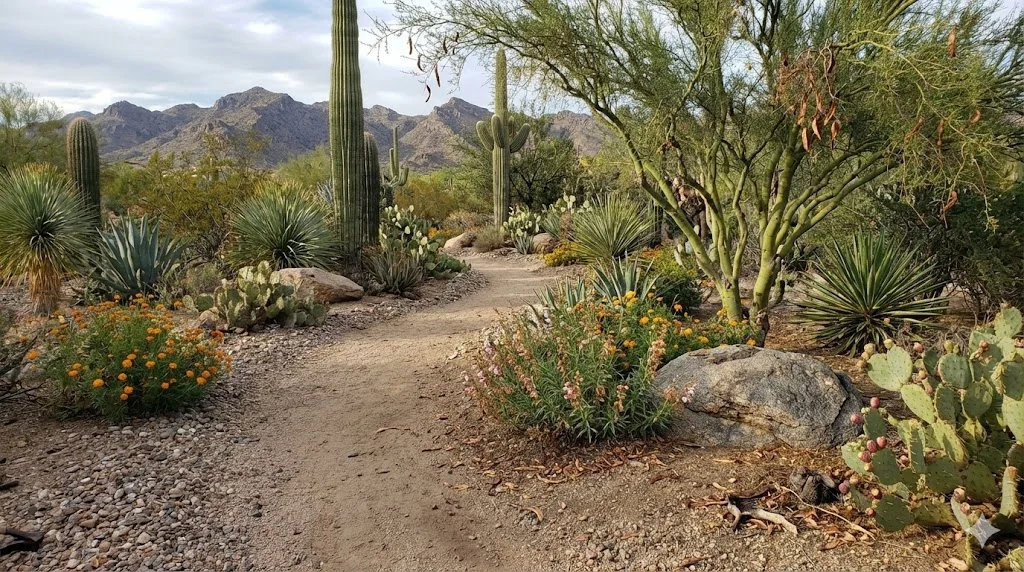
There is a particular beauty in the desert that no other landscape can match. The clean silhouettes of saguaro cacti against a sunset sky, the blue-green rosettes of agave anchoring a gravel slope, the fiery bloom of an ocotillo after spring rain — these are images that stay with you. A well-designed xeriscape garden captures that beauty and brings it home, creating an outdoor space that is as striking as it is responsible with water.
Xeriscape garden design is not about deprivation. It is not a landscape of bare gravel and survival. Done well, a desert garden overflows with color, texture, and seasonal interest while using a fraction of the water consumed by a traditional lawn. In regions where water is precious — and increasingly, that means nearly everywhere — xeriscape principles offer a path to gardens that are both beautiful and sustainable.
Whether you live in the Sonoran Desert, the arid Southwest, or a temperate climate facing drought restrictions, this guide will walk you through every aspect of desert landscaping ideas, from the foundational principles of xeriscape to the fine details of plant selection, hardscape materials, irrigation, and lighting.
The Seven Principles of Xeriscape
The term "xeriscape" was coined in Denver, Colorado in 1981, combining the Greek word xeros (dry) with landscape. It rests on seven principles that, taken together, create gardens requiring dramatically less water without sacrificing beauty.
1. Planning and design. Every successful xeriscape begins with a thoughtful plan that accounts for sun exposure, slope, soil type, existing vegetation, and how you intend to use the space. Grouping plants by water need — a concept called hydrozoning — is the single most important design decision you will make.
2. Soil improvement. Desert soils are often sandy, alkaline, and low in organic matter. Adding compost to planting areas improves water retention and root development, though many native desert plants actually prefer lean, fast-draining soil. Know your plants before you amend.
3. Appropriate plant selection. Choose plants adapted to your climate and rainfall. Native and regionally adapted species are the backbone of any xeriscape. They have evolved to thrive on the water nature provides.
4. Practical turf areas. Xeriscape does not demand zero lawn, but it asks you to limit turf to areas where it serves a genuine purpose — a play area for children, for example — and to choose drought-tolerant grass varieties where you do use it.
5. Efficient irrigation. Drip irrigation delivers water directly to root zones, eliminating the waste of overhead sprinklers. Paired with a smart controller and rain sensor, a drip system can reduce outdoor water use by 50 to 70 percent compared to conventional sprinklers.
6. Mulching. A layer of mulch — decomposed granite, gravel, or organic bark — reduces evaporation, moderates soil temperature, and suppresses weeds. In desert gardens, inorganic mulches like gravel and decomposed granite are preferred because they do not break down or harbor moisture-loving pests.
7. Appropriate maintenance. Xeriscape gardens are low-maintenance, not no-maintenance. Proper pruning, seasonal cleanup, and irrigation adjustment keep the garden healthy and attractive year after year.
These seven principles are not rules imposed from outside. They are a framework for working with your environment rather than against it — and the gardens that result are more resilient, less costly, and often more beautiful than the water-hungry landscapes they replace.
Building a Desert Plant Palette
The plant palette is where xeriscape garden design becomes genuinely exciting. Desert-adapted plants offer an astonishing range of forms — from towering columnar cacti to ground-hugging succulents, from feathery-leaved trees to explosive seasonal wildflowers.
Cacti: The Icons
No desert garden is complete without cacti. Their sculptural forms create instant drama and serve as natural focal points.
- Saguaro (Carnegiea gigantea) — The iconic multi-armed cactus of the Sonoran Desert. Slow-growing but magnificent, reaching 40 feet over decades. Suitable for USDA zones 9-11.
- Barrel cactus (Ferocactus) — Rounded, ribbed forms ranging from one to four feet. Golden spines catch the light beautifully.
- Prickly pear (Opuntia) — Paddle-shaped segments, vivid flowers, and edible fruit. Some species are hardy to zone 4, making them one of the most versatile cacti for non-desert climates.
- Cholla (Cylindropuntia) — Cylindrical stems with dense spines that glow when backlit. Dramatic in evening light.
Succulents and Rosette Plants
Succulents provide the middle layer of a desert garden, filling spaces between larger specimens with rich texture and unexpected color.
- Agave — Bold rosettes ranging from the compact Agave parryi (2 feet) to the massive Agave americana (6 feet or more). Blue-gray, green, and variegated forms are available. Most are monocarpic, producing a spectacular flower stalk before dying.
- Yucca — Sword-shaped leaves and tall flower spikes of creamy white bells. Yucca rostrata (beaked yucca) is one of the most elegant landscape plants in any style.
- Aloe — Winter-blooming coral and orange flower spikes provide critical color in the cool season. Aloe vera, Aloe arborescens, and the tree aloe Aloe barberae all work beautifully in frost-free gardens.
- Dasylirion (desert spoon) — Fine-textured, grass-like rosettes that contrast beautifully with the bold shapes of agave and cactus.
Desert Trees and Shrubs
Trees provide shade, scale, and habitat in the xeriscape. Desert-adapted trees are typically small to medium, with fine or sparse foliage that casts filtered shade.
- Palo verde (Parkinsonia) — Green-barked trees that photosynthesize through their trunks and branches. Clouds of yellow flowers in spring. The quintessential desert shade tree.
- Ironwood (Olneya tesota) — Dense, slow-growing, and incredibly long-lived. Lavender flowers and excellent wildlife habitat.
- Mesquite (Prosopis) — Tough, graceful trees with feathery foliage and deep taproots that find water far below the surface.
- Ocotillo (Fouquieria splendens) — Not a cactus but a deciduous shrub with long, whip-like stems that leaf out after rain and produce brilliant red flowers at their tips. One of the most dramatic plants in any garden.
Desert Wildflowers
For sheer spectacle, nothing rivals a desert in bloom. By scattering seed of native wildflowers in open gravel areas, you can create seasonal displays that rival any traditional flower border.
- Mexican gold poppy (Eschscholzia californica subsp. mexicana) — Sheets of golden orange in spring.
- Desert lupine (Lupinus sparsiflorus) — Blue-violet spikes that complement the warm tones of poppies.
- Penstemon — Tubular flowers in red, pink, and purple that are magnets for hummingbirds.
- Desert marigold (Baileya multiradiata) — Cheerful yellow daisies that bloom nearly year-round in mild climates.
Hardscape Materials for Desert Gardens
In a xeriscape, hardscape is not merely functional — it is a major design element, often covering more ground area than planting. The materials you choose set the tone for the entire garden.
Decomposed Granite
Decomposed granite (DG) is the workhorse material of desert landscaping ideas. Available in warm tones from gold to russet to gray, it creates paths, patios, and open areas with a natural, informal character. DG compacts well underfoot and provides excellent drainage. Use stabilized DG (mixed with a binding agent) for paths and patios where you want a firmer surface.
Boulders and Stone
Boulders anchor a desert garden the way mature trees anchor a woodland. Choose locally sourced stone — it connects your garden to the surrounding landscape and avoids the artificial look of imported rock. Place boulders partially buried, as they would appear in nature, with their largest face exposed. Odd numbers (groups of three or five) create more natural compositions than even numbers.
Flagstone
Flagstone provides a more refined surface for patios and stepping-stone paths. Arizona flagstone, with its warm reds and golds, complements desert planting beautifully. Set flagstone in DG for a relaxed look, or in mortar on a concrete base for a more formal installation.
Dry Creek Beds
A dry creek bed — a shallow channel lined with river rock and cobbles — serves both a drainage function and an aesthetic one. It channels rainwater away from structures during storms and creates a beautiful landscape feature in dry weather. Plant the edges with native grasses and low shrubs for a naturalistic effect.
Designing Drip Irrigation
Efficient irrigation is the mechanical heart of any xeriscape. Drip irrigation delivers water slowly and directly to the root zone of each plant, virtually eliminating waste from evaporation, wind, and runoff.
Layout Principles
Divide your garden into hydrozones — areas grouped by water need. A typical desert garden might have three zones:
- Low water zone — Established native cacti and succulents that survive on rainfall alone, or with monthly deep watering in the hottest months.
- Moderate water zone — Desert-adapted shrubs, trees, and perennials that benefit from weekly to biweekly drip irrigation during summer.
- Occasional water zone — Accent plants, container plantings, or small vegetable plots that need regular watering.
Each hydrozone should have its own irrigation valve, allowing you to tailor watering schedules precisely. When you plan your garden layout with distinct planting zones, grouping plants by water need becomes intuitive rather than an afterthought.
Emitter Selection
Use individual drip emitters (1, 2, or 4 gallons per hour) for trees and large shrubs, and inline drip tubing with pre-spaced emitters for ground covers and massed plantings. Avoid micro-sprayers in desert gardens — they lose too much water to evaporation in hot, dry air.
Watering Schedule
The most common mistake in desert irrigation is watering too often and too shallowly. Deep, infrequent watering encourages roots to grow downward, making plants more drought-resilient. In summer, a deep soak every 7 to 14 days is typically sufficient for established desert plants. In winter, most native plants need no supplemental water at all.
Creating Focal Points with Specimen Plants
Every desert garden needs moments that stop you in your tracks. Specimen plants — large, architecturally striking individuals placed at key points — provide those moments.
A single large saguaro, a mature Yucca rostrata with a clear trunk, or a multi-headed Agave americana can serve as the visual anchor of an entire garden. Place specimen plants where paths converge, at the end of sight lines, or against a simple wall where their silhouette can be fully appreciated.
Surround specimen plants with low, simple planting — gravel, ground-cover succulents, or a drift of a single species — so that nothing competes for attention. The contrast between the bold specimen and the quiet ground plane is what creates drama.
Desert Color Through the Seasons
One of the most persistent myths about desert gardens is that they lack color. In truth, a well-planned xeriscape can deliver vivid color in every season.
Spring is the showiest season. Wildflowers carpet open ground, palo verde trees erupt in yellow, and cacti produce waxy flowers in electric shades of magenta, orange, and red. Penstemon, globemallow, and brittlebush add layers of warm color.
Summer brings the bold greens of monsoon-fed growth, the coral flower spikes of aloe and hesperaloe, and the fiery red tips of ocotillo. Summer is also when night-blooming cereus opens its extraordinary white flowers for a single night.
Fall offers warm foliage tones from deciduous desert trees like mesquite and palo verde, plus late-season blooms from desert marigold and autumn sage (Salvia greggii). The slanting light of fall makes golden gravel and warm-toned stone glow.
Winter is the season of structure. With many plants dormant or leafless, the garden reveals its bones — the sculptural forms of cacti, the architecture of bare branches, the pattern of boulders against gravel. Winter-blooming aloes provide splashes of coral and orange against this quiet backdrop.
For more ideas on building drought-tolerant plantings with year-round interest, the succulent garden design guide covers complementary techniques that work beautifully alongside xeriscape principles.
Night Lighting for Sculptural Plants
Desert plants are inherently sculptural, and landscape lighting transforms them into living art after dark. The spines of a cholla cactus glow when backlit. The shadow of an agave rosette thrown against a stucco wall becomes a dramatic graphic. An uplighted palo verde canopy creates a green ceiling over a seating area.
Lighting Techniques
- Uplighting — Place a low-voltage fixture at the base of a specimen plant, angled upward. This highlights form and casts dramatic shadows.
- Backlighting — Position a light behind a translucent or spiny plant (cholla, ocotillo) to create a halo effect.
- Moonlighting — Mount a fixture high in a tree, angled downward, to cast soft, dappled light and natural-looking shadows on the ground below.
- Path lighting — Low bollards or recessed fixtures along decomposed granite paths provide safe navigation while maintaining the garden's nighttime atmosphere.
Use warm white LEDs (2700K) to complement the warm tones of desert stone and gravel. Avoid cool white or blue-toned lights, which create an artificial look that clashes with the natural palette.
Adapting Xeriscape to Non-Desert Climates
Xeriscape principles are universal, even if the specific plants are not. Gardeners in the Pacific Northwest, the Midwest, the Southeast, and even the United Kingdom can apply xeriscape thinking to reduce water use and create more resilient gardens.
The key adaptations are:
Plant selection. Replace desert natives with drought-tolerant plants suited to your climate. Ornamental grasses (Nassella, Muhlenbergia, Panicum), lavender, rosemary, sedums, and many Mediterranean species thrive in non-desert climates with minimal supplemental water once established.
Soil and drainage. In climates with higher rainfall, excellent drainage becomes even more critical. Many drought-adapted plants will tolerate dry soil but rot in wet winter conditions. Raised beds, gravel mulch, and amended soil help replicate the fast-draining conditions these plants require.
Mulch choices. In wetter climates, gravel mulch around drought-tolerant plants is preferable to organic mulch, which retains moisture and can promote crown rot.
Design vocabulary. The gravel-and-boulder aesthetic of desert gardens translates beautifully to non-desert settings. A gravel garden planted with lavender, salvias, and ornamental grasses achieves the same water-wise goals with a plant palette suited to cooler, wetter climates. The Mediterranean garden style guide explores a closely related approach for temperate regions with dry summers.
Water Savings: The Numbers
The practical case for xeriscape is overwhelming. According to the Environmental Protection Agency, landscape irrigation accounts for nearly one-third of all residential water use in the United States — roughly 9 billion gallons per day. A well-designed xeriscape can reduce outdoor water use by 50 to 75 percent compared to a conventional landscape dominated by turf grass.
In concrete terms, replacing a 1,000-square-foot lawn with a xeriscape garden in a hot, arid climate can save 30,000 to 55,000 gallons of water per year. That is not only good for the environment — it translates directly to lower utility bills, often paying for the cost of the new landscape within two to four years.
Beyond water savings, xeriscapes reduce fertilizer and pesticide use (native plants rarely need either), eliminate the emissions and noise of weekly mowing, and dramatically cut maintenance time. When you experiment with different xeriscape layouts before breaking ground, you can optimize plant spacing and hardscape proportions to maximize both beauty and water efficiency.
Wildlife in the Desert Garden
A xeriscape is far from lifeless. Desert gardens designed with wildlife in mind become thriving habitats for birds, pollinators, and other creatures.
Hummingbirds are drawn to the tubular flowers of penstemon, chuparosa (Justicia californica), and red yucca (Hesperaloe parviflora). A garden with a succession of these blooms will host hummingbirds from early spring through fall.
Native bees — including many solitary species that nest in the ground — depend on open patches of bare soil or decomposed granite, which xeriscape gardens provide naturally. Flowering cacti, desert willow, and globemallow are excellent nectar sources.
Butterflies use desert milkweed (Asclepias subulata) as a larval host plant, and adults feed on lantana, verbena, and desert marigold.
Lizards and beneficial reptiles thrive among boulders and rock piles, which provide basking sites, shelter, and hunting grounds. A dry-stacked stone wall is a luxury habitat for these garden allies.
Birds use the dense, spiny structure of cholla and prickly pear for nesting sites, safe from predators. Mesquite and ironwood trees provide seeds, shade, and perching. A simple dripping water source — even a slowly dripping hose bib — will attract an astonishing diversity of desert birds.
Bringing It All Together
Designing a desert or xeriscape garden is an exercise in working with nature's constraints rather than against them. The principles are clear: plan thoughtfully, choose adapted plants, irrigate efficiently, and let the stark beauty of stone, gravel, and sculptural plants speak for itself.
Start with the bones — the hardscape, the boulders, the paths — and let the planting grow into those spaces over time. Desert gardens, like deserts themselves, reward patience. A newly planted agave is a modest thing. Give it five years, and it commands the garden. A young palo verde is a stick in the ground. In a decade, it is a canopy that defines an outdoor room.
The desert teaches that beauty does not require abundance. Sometimes the most powerful garden is the one with the most space between its elements — where a single cactus against a gravel slope says everything that needs to be said.
For a broader view of how xeriscape fits into the full spectrum of garden design approaches, see the complete guide to garden design styles.
Garden Design Team
Expert garden designers sharing tips, inspiration, and practical advice for creating beautiful outdoor spaces.
Explore professional garden design
Gardenly3D is a paid professional garden-design application. See plans for included capabilities and availability.
Join the waitlistRelated articles
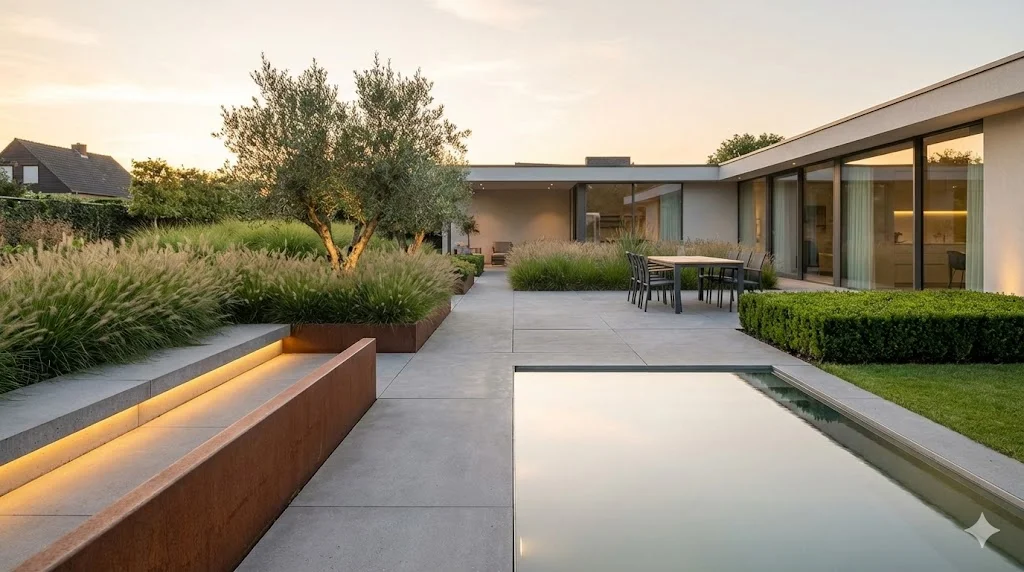
Garden Design Styles: The Complete Guide
Explore every major garden design style from cottage to Japanese, modern to Mediterranean. Find the perfect style for your space, climate, and taste.
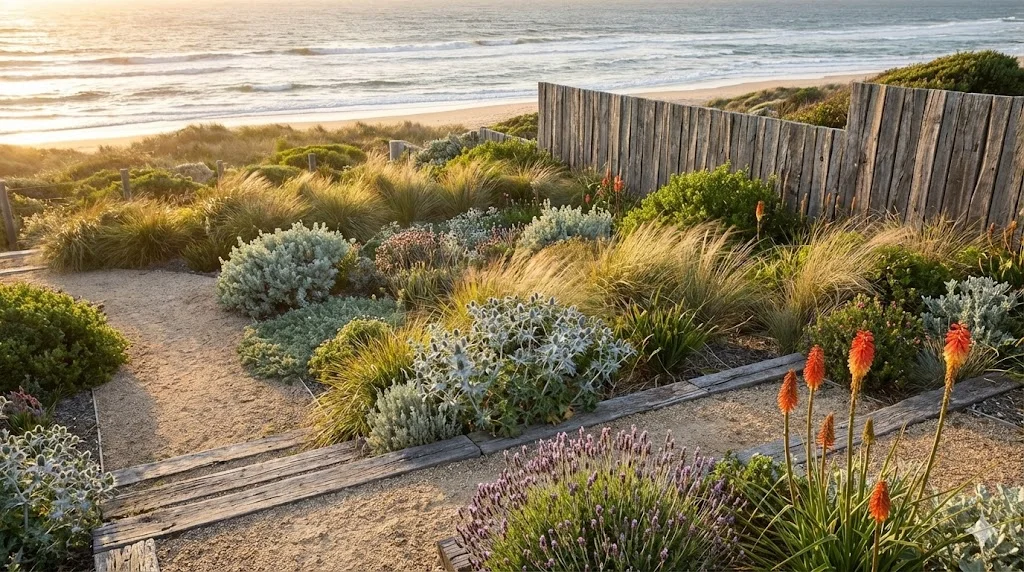
Coastal Garden Design: Salt-Tolerant Beauty
Design a beautiful coastal garden that thrives in salt spray, wind, and sandy soil. Discover the best seaside garden plants and design techniques for exposed sites.
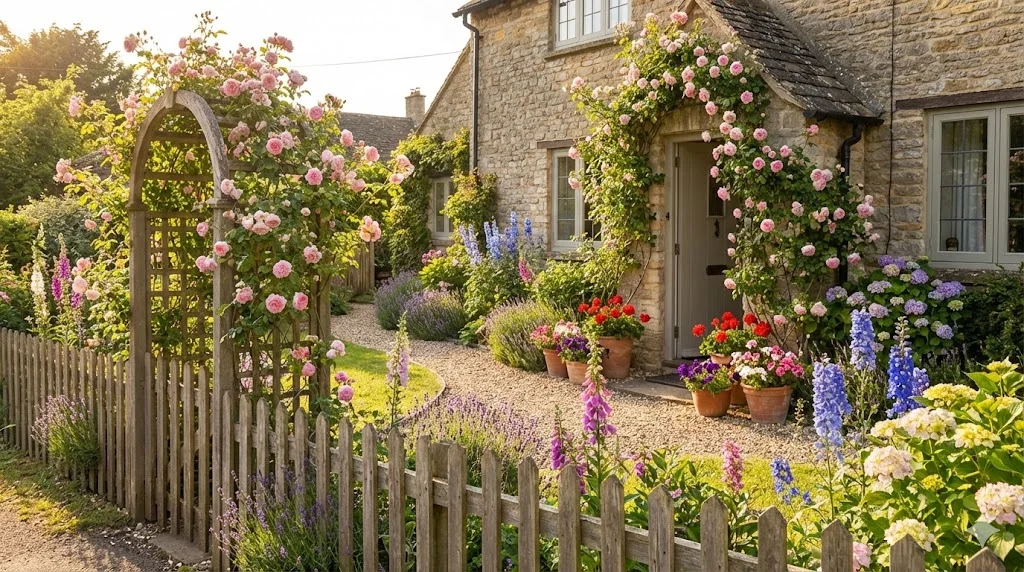
Cottage-Style Front Garden: Welcoming and Colorful
Transform your front garden into a welcoming cottage paradise with climbing roses, flower-lined paths, and seasonal color. Design tips for maximum curb appeal.