
Garden Design for Japan
Design a Japanese-inspired garden with four-season appreciation, cherry blossom framing, moss and bamboo, and rainy season drainage for Japan's climate.
Garden Design for Japan
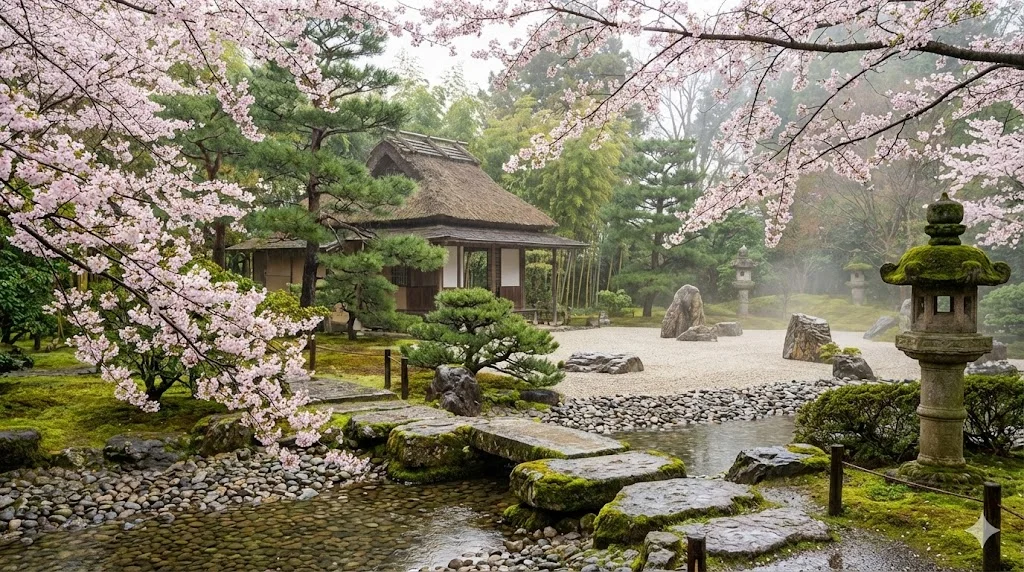
Japan's garden tradition is one of the oldest, most refined, and most influential in the world. For over a thousand years, Japanese gardeners have developed an aesthetic that distills nature into its essential forms — moss-covered stones, raked gravel, carefully pruned pines, the fleeting pink cloud of cherry blossoms, and the quiet sound of water falling into a stone basin. This tradition grows from a deep attentiveness to climate, season, and place that remains profoundly relevant to modern garden design anywhere in the world.
But Japan is also a country with highly specific growing conditions. The combination of distinct four-season cycles, heavy monsoon rains, high humidity, volcanic soils, and widely varying temperature zones creates a gardening environment that demands both aesthetic sensitivity and practical expertise.
This guide is part of our Garden Design for Your Climate Zone series. It covers both the traditional Japanese garden aesthetic and the practical realities of designing gardens for Japan's diverse climate.
Understanding Japan's Climate
Japan stretches from the subarctic island of Hokkaido to the subtropical Ryukyu Islands, covering USDA Zones 4 through 11:
- Hokkaido — USDA Zone 4–6. Cold winters with heavy snow. Cool summers. Continental climate similar to the northern US Midwest.
- Tohoku and central Honshu — Zone 6–8. Cold, snowy winters (especially the Sea of Japan side). Warm, humid summers. Four very distinct seasons.
- Kanto (Tokyo area) — Zone 8b–9a. Mild winters, hot humid summers. Heavy rain in June–July (tsuyu, the rainy season) and September–October (typhoon season).
- Kansai (Kyoto, Osaka) — Zone 8b–9a. Similar to Kanto but slightly warmer, with intensely hot, humid summers.
- Shikoku and Kyushu — Zone 9–10. Warm temperate to subtropical. Heavy rainfall, mild winters, long growing seasons.
- Okinawa and Ryukyu Islands — Zone 10b–11. Subtropical to tropical. Typhoon risk, year-round warmth.
Key climate characteristics across Japan:
- Monsoon rainfall: Japan receives 1,000–2,500 mm (40–100 inches) annually, with concentrated rainy seasons (tsuyu in June–July and typhoon season in September–October)
- High humidity: Summer humidity regularly exceeds 80%, promoting lush growth but also fungal disease
- Typhoons: Destructive winds and flooding rains, particularly in southern and coastal areas
- Heavy winter snow: The Sea of Japan coast receives some of the heaviest snowfall in the world (3–5 m / 10–16 ft in mountain areas)
- Volcanic soil: Rich, well-draining volcanic ash soil in many regions
The Four-Season Philosophy
The organizing principle of Japanese garden design is seasonal appreciation — the idea that each season has its own beauty, and the garden should be designed to reveal and celebrate it:
Spring (*Haru*)
Cherry blossoms (sakura) define spring, but the Japanese garden celebrates the entire unfolding:
- Plum blossom (ume) — The first flowering tree, blooming as early as February. White or pink flowers on bare branches.
- Cherry blossom (sakura) — Peak in early to mid-April. Yoshino cherry (Prunus x yedoensis) is the most beloved variety.
- Azaleas (tsutsuji) — Carpets of color in April–May, essential in temple and residential gardens
- Wisteria (fuji) — Cascading purple, pink, or white racemes, trained on arbors and pergolas
- New maple leaves — The delicate chartreuse of emerging Japanese maple foliage
Summer (*Natsu*)
Lush green dominates. The garden becomes a cool retreat from summer heat:
- Hydrangea (ajisai) — The signature rainy-season flower, blue, pink, and white
- Iris (hanashobu) — Japanese water iris in June, often planted in dedicated iris gardens
- Lotus (hasu) — Sacred flower of Buddhism, grown in ponds and water features
- Bamboo — At its most vibrant in summer, providing rustling shade and screening
- Moss — Lush, velvety green during the humid summer months
Autumn (*Aki*)
The counterpart to spring's cherry blossoms — autumn maple viewing (momijigari) is a centuries-old tradition:
- Japanese maple (momiji) — Hundreds of varieties in crimson, orange, gold, and deep purple
- Ginkgo — Brilliant golden yellow, fan-shaped leaves
- Chrysanthemum (kiku) — The imperial flower of Japan, autumn-blooming
- Miscanthus (susuki) — Silver plumes in the autumn breeze, associated with the moon-viewing tradition
- Persimmon (kaki) — Orange fruit hanging on bare branches in late autumn
Winter (*Fuyu*)
Simplicity and structure reveal the garden's bones:
- Pine (matsu) — Evergreen backbone of the Japanese garden, carefully pruned to reveal branching structure
- Snow-viewing (yukimi) — Snow on stone lanterns, bridges, and pruned trees creates iconic winter compositions
- Camellia (tsubaki) — Winter to early spring flowers, glossy evergreen foliage
- Bamboo — Green structure against grey skies
- Dried grasses and bare branches — The beauty of wabi-sabi, the appreciation of impermanence
In Japanese garden philosophy, beauty is not confined to bloom. The fall of a single leaf, the pattern of snow on stone, the sound of rain on bamboo — these are as designed for as any flower border.
Rainy Season Drainage
Japan's heavy monsoon rains demand serious drainage planning:
Drainage Strategies
- Gravel and dry stream beds (karesansui) — Gravel raked in wave patterns and dry stream beds serve both aesthetic and drainage functions, channeling water during heavy rain
- Raised moss mounds — Traditional moss gardens are often mounded to improve drainage and prevent waterlogging
- Stone-lined channels — Decorative stone channels (suimon) direct water through the garden
- Tsukubai (water basins) — Overflow channels direct excess water away from foundations
- Permeable gravel surfaces — Traditional Japanese gardens use extensive gravel areas that absorb rainfall
- Terracing on slopes — Stone-retained terraces prevent erosion during heavy downpours
When you plan your garden's drainage paths and water features, you can ensure that rain management and aesthetic beauty work together.
Key Design Elements
Moss
Japan's humidity and rainfall create ideal conditions for moss, which has been elevated to a primary design material:
- Over 2,500 species of moss exist in Japan
- Moss gardens (kokeniwa) use moss as the primary ground cover, creating velvety green carpets
- Moss thrives in shade, acidic soil, and consistent moisture — conditions found throughout much of Japan
- Moss requires minimal maintenance but benefits from debris removal and occasional watering during dry spells
Bamboo
Bamboo serves multiple functions in Japanese gardens:
- Screening and privacy — Dense clumping bamboo creates living walls
- Sound — Leaves rustling in the wind add acoustic texture
- Fencing — Traditional bamboo fences (takegaki) in dozens of named styles
- Water features — Bamboo spouts (shishi-odoshi, deer scarers) combine sound and movement
- Structural element — Bamboo canes used for trellising, stakes, and decorative supports
Stone
Stone is the most permanent element in the Japanese garden, chosen for natural beauty of form, color, and texture:
- Stepping stones (tobi-ishi) — Set in moss or gravel to guide movement through the garden
- Stone lanterns (toro) — Functional lighting, now primarily decorative focal points
- Water basins (tsukubai) — Low stone basins for ritual hand-washing
- Stone groupings — Arrangements of three, five, or seven stones representing mountains, islands, or abstract compositions
Pruning as Art
Japanese garden pruning (niwaki) is a distinctive skill that shapes plants into forms that suggest age, wind exposure, and natural growth:
- Cloud pruning — Removing inner branches and foliage to create floating "cloud" shapes on pine, juniper, and other evergreens. For a deeper exploration of these principles applied outside Japan, see our guide to Japanese garden design principles.
- Transparent pruning — Thinning to reveal branch structure while maintaining natural form
- Size control — Keeping trees and shrubs at garden scale through annual, disciplined pruning
- Seasonal timing — Different species are pruned at specific times to maintain health and form
Plants for Japanese Gardens
Trees
- Japanese maple (Acer palmatum) — Hundreds of cultivars in every size and color
- Japanese black pine (Pinus thunbergii) — Coastal, dramatic, the most pruned tree in Japanese gardens
- Yoshino cherry (Prunus x yedoensis) — The classic cherry blossom tree
- Ginkgo (Ginkgo biloba) — Ancient, golden fall color
- Japanese cedar (Cryptomeria japonica) — Tall, conical evergreen
Shrubs
- Azalea (Rhododendron) — Essential, clipped into rounded mounds (o-karikomi)
- Camellia (Camellia japonica) — Winter flowers, evergreen structure
- Nandina — Bamboo-like foliage, red berries, fall color
- Pieris (Pieris japonica) — Cascading spring flowers, evergreen
Perennials and Ground Covers
- Hosta — Shade-loving, bold foliage
- Japanese iris (Iris ensata) — Large, flat flowers in purple, white, and pink
- Hakone grass (Hakonechloa macra) — Cascading golden grass. Interestingly, many Japanese garden plants also thrive in Scandinavian gardens, where the cool, moist conditions and acidic soils create surprisingly compatible growing environments.
- Ferns — Dozens of native species for shade
- Liriope — Grass-like ground cover, purple flowers
Getting Started: Your Japanese-Inspired Garden Plan
- Embrace restraint — The Japanese garden aesthetic values simplicity and space. Every element should earn its place.
- Plan for all four seasons — Design with specific plants and views for spring, summer, autumn, and winter.
- Solve drainage first — Japan's heavy rains demand excellent drainage, which can be beautiful as well as functional.
- Start with stone — Place your major stones first. They are the most permanent and most important elements.
- Plant for structure — Choose trees and shrubs for their winter silhouette and branch character, not just their flowers.
- Encourage moss — In humid, shaded areas, let moss colonize naturally. It is the most authentic and lowest-maintenance ground cover.
- Learn to prune — Japanese pruning takes years to master, but even basic techniques dramatically improve the garden's character.
- Design for quiet — The Japanese garden is a place of contemplation. Water sounds, rustling bamboo, and birdsong are the intended soundtrack. Design for peace.
The Japanese garden tradition offers a profound model for garden design in any climate: observation of nature, sensitivity to season, economy of means, and the conviction that a garden is not a collection of plants but a composition of space, light, stone, water, and living things — changing, aging, and growing more beautiful with time.
Garden Design Team
Expert garden designers sharing tips, inspiration, and practical advice for creating beautiful outdoor spaces.
Explore professional garden design
Gardenly3D is a paid professional garden-design application. See plans for included capabilities and availability.
Join the waitlistRelated articles
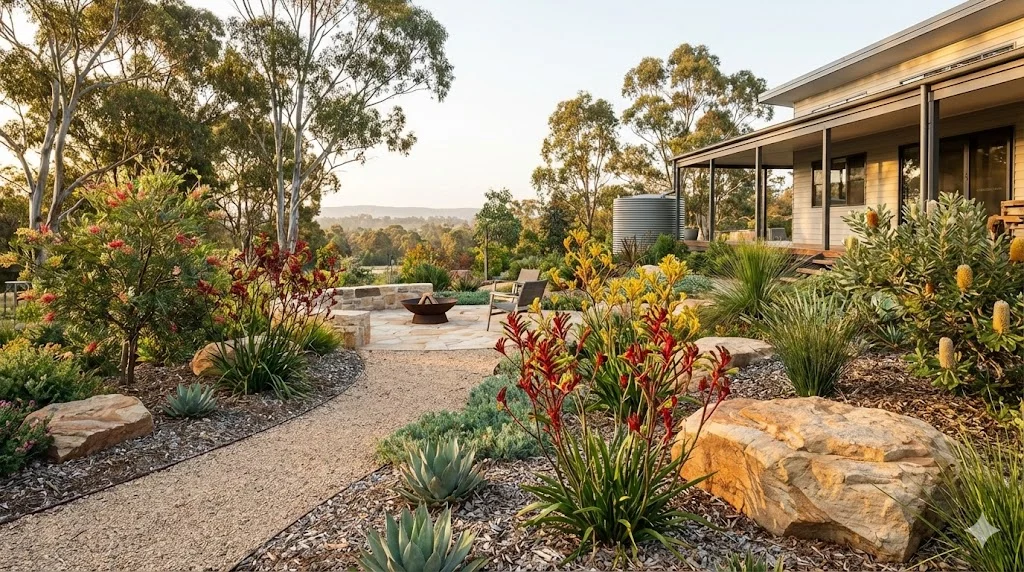
Garden Design for Australian Conditions
Design a resilient Australian garden with native plants, bushfire-safe landscaping, water-wise strategies, and solutions for subtropical to arid climates.
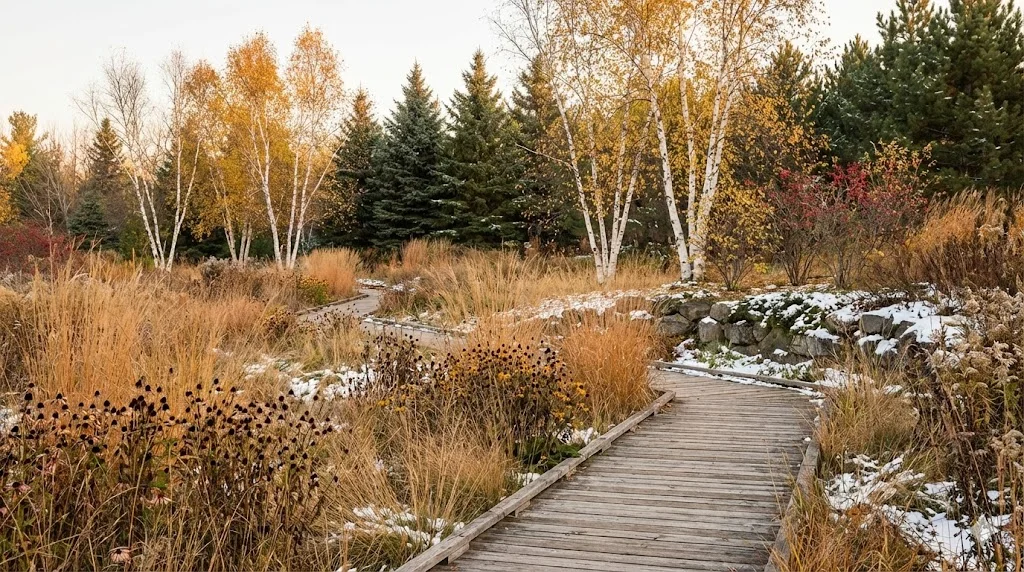
Garden Design for Canada
Design a resilient Canadian garden with extreme cold strategies, native prairie and boreal plants, short season planting, and wildlife-friendly garden design.
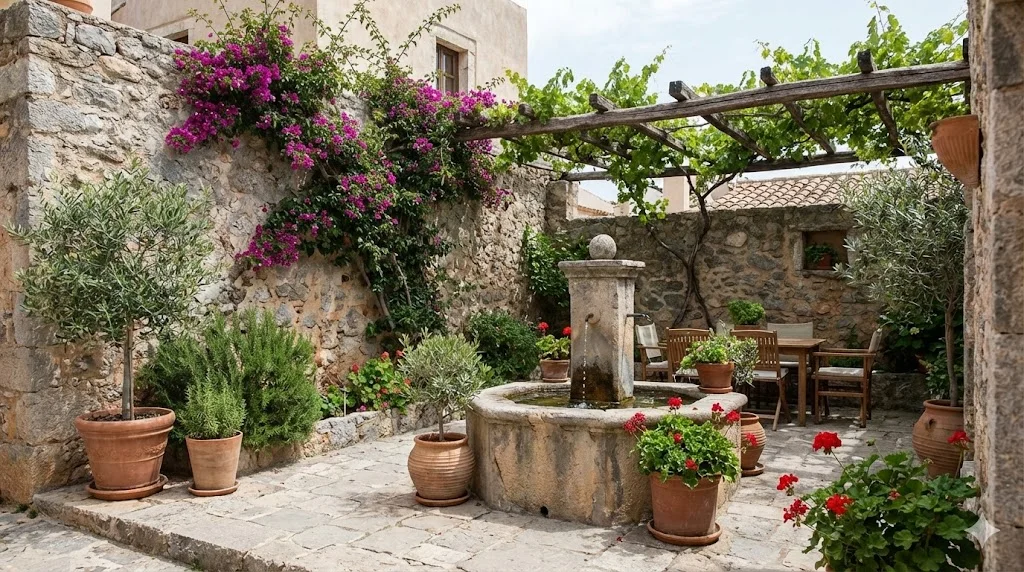
Garden Design for Coastal Mediterranean (Spain, Italy, Greece)
Design a stunning coastal Mediterranean garden with bougainvillea, citrus, courtyards, dry stone walls, and irrigation strategies for Spain, Italy, and Greece.