
How to Design a Water Feature for Your Garden
Design a garden water feature with guidance on ponds, fountains, rills, bubbling stones, wildlife ponds, pump selection, and child safety measures.
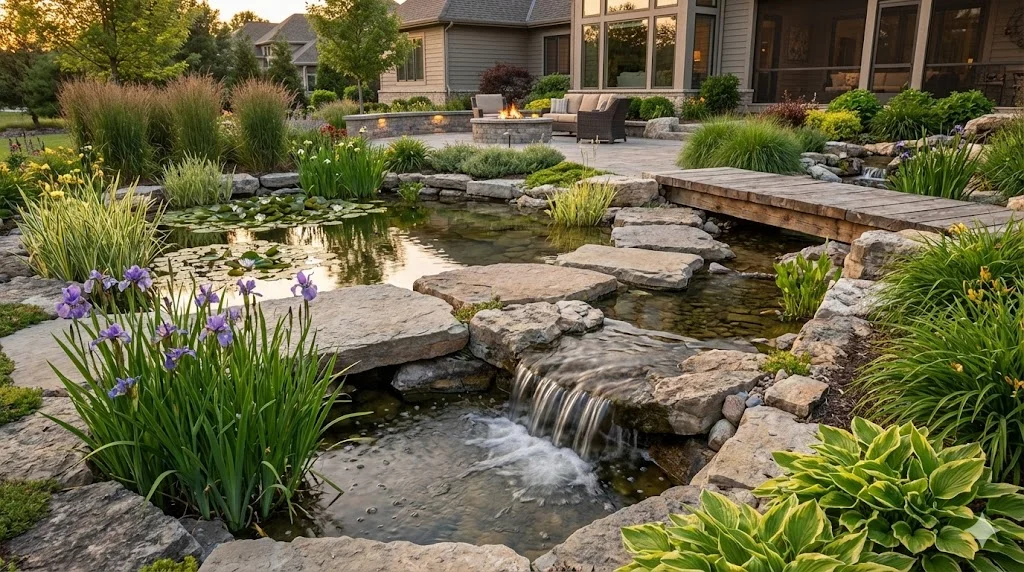
How to Design a Water Feature for Your Garden
Water brings a garden to life in a way that nothing else can. The sound of trickling water masks urban noise. The reflective surface doubles the sky and surrounding planting. The movement of water catches light and draws the eye. And within weeks of installation, wildlife arrives -- birds to bathe, dragonflies to hunt, frogs to breed. Even the simplest water feature transforms a garden's atmosphere.
Water features range from a small bubbling stone that takes an afternoon to install to an ambitious wildlife pond that becomes the centerpiece of an entire garden. Whatever your budget, space, and ambition, there is a water feature that will work for you. This guide covers every option and helps you choose, size, and install the right one. For the full garden design process, see our beginner's guide to designing a garden from scratch.
Types of Water Features
Bubbling Stones and Sphere Fountains
Best for: Small gardens, patios, child-safe environments
A bubbling stone is the simplest water feature: a drilled boulder or sphere placed over a hidden reservoir. Water is pumped up through the stone and flows back down over its surface into a concealed basin below. No open water is visible, making it completely safe for gardens with small children.
Despite their simplicity, bubbling stones produce a beautiful, gentle sound and create a focal point that draws the eye. Place one near a seating area where you can hear the water while relaxing.
Wall-Mounted Spouts
Best for: Courtyards, small gardens, formal designs
A spout mounted on a wall pours water into a trough or basin below. Styles range from classical lion heads to modern stainless steel slots. Wall spouts work well where ground space is limited -- they use vertical space instead. The gentle pouring sound is pleasant without being overwhelming.
Freestanding Fountains
Best for: Formal gardens, courtyard centers, large patios
A freestanding fountain becomes a centerpiece. Traditional tiered fountains suit period properties. Modern sculptural fountains suit contemporary gardens. The splash and movement of a fountain brings energy and draws the eye from every direction.
Rills
Best for: Formal and modern gardens, connecting spaces
A rill is a narrow, shallow channel of moving water -- essentially a miniature canal. Rills create visual connections between spaces, guiding the eye and the feet along their length. They can run straight (formal) or curve gently (naturalistic). Rills are shallow and narrow, making them relatively safe and economical with water.
Ponds
Best for: Wildlife gardens, naturalistic designs, large gardens
A pond is the most ambitious water feature and the most rewarding for wildlife. Even a small pond (1 x 1.5 meters / 3 x 5 feet) supports an extraordinary diversity of life. A larger pond can include marginal planting shelves, a deep zone for overwintering, and even fish.
Wildlife Ponds
A wildlife pond differs from an ornamental pond in several ways:
- Gently sloping edges that allow creatures to enter and exit
- No fish (fish eat tadpoles and many invertebrates)
- Native marginal plants rather than exotic water lilies
- At least one side with a shallow pebble beach for birds and mammals to drink
- A depth of at least 60 cm (2 feet) in the deepest section to prevent freezing solid in winter
A wildlife pond is the single most impactful thing you can do for biodiversity in your garden. Within the first year, you will likely see frogs, newts, dragonflies, water beetles, birds bathing, and hedgehogs drinking. It is endlessly fascinating.
Choosing the Right Location
Sun and Shade
- Wildlife ponds: Ideally receive 5-6 hours of sun. Some shade is beneficial to prevent excessive algae growth.
- Ornamental ponds: Similar to wildlife ponds. Avoid heavy shade from overhanging trees, which drop leaves into the water.
- Fountains and features: Can be placed in sun or shade. In shade, algae growth on surfaces is reduced.
Proximity to the House
Place your water feature where you can enjoy it. The sound of water is most appreciated near seating areas. The visual effect is best when visible from a main window. Do not hide your water feature at the bottom of the garden where you rarely visit.
Level Ground
All water features must be level -- water is unforgiving. Even a slight slope means water will overflow on one side. For ponds, this means careful leveling during excavation. For raised features, use a spirit level during installation.
Electricity Supply
Most water features require a pump, which needs an electrical connection. Plan the route for an armored cable from the house to the water feature during the design phase, before paths are laid. All outdoor electrical work must be protected by a residual current device (RCD/GFCI) and should be installed by a qualified electrician.
Pump Selection
Pump Types
- Submersible pumps: Sit inside the water, hidden from view. Suitable for most garden features.
- External pumps: Positioned outside the water in a concealed housing. More powerful, easier to maintain, suitable for large ponds and ambitious water features.
Sizing Your Pump
A pump is rated by its flow rate (liters per hour or gallons per hour) and maximum head height (how high it can push water):
- Bubbling stone: 300-600 liters/hour (80-160 gph)
- Small wall spout: 600-1,200 liters/hour (160-320 gph)
- Small fountain: 1,000-2,000 liters/hour (260-530 gph)
- Rill or waterfall: 2,000-5,000 liters/hour (530-1,320 gph) depending on width and flow
- Large pond circulation: 5,000+ liters/hour (1,320+ gph)
Choose a pump slightly more powerful than your minimum requirement. Most pumps have a flow adjuster, so you can reduce the output, but you cannot exceed the maximum.
Building a Simple Pond: Step by Step
- Mark the outline: Use a garden hose or rope to define the shape on the ground. View it from multiple angles and from inside the house.
- Excavate: Dig to the required depth, creating marginal shelves 20-30 cm (8-12 inches) deep around the edges for marginal plants, and a deeper central zone of 60-90 cm (24-36 inches).
- Remove sharp stones: Check the excavation for anything that could puncture the liner.
- Lay underlay: Use purpose-made pond underlay or old carpet to protect the liner.
- Lay the liner: Use butyl or EPDM rubber liner. Calculate the size by adding twice the maximum depth plus 60 cm (24 inches) overlap to both the length and width measurements.
- Fill with water: Allow the liner to settle into the shape as the water fills. Smooth out major wrinkles.
- Trim and edge: Once filled, trim the liner leaving a 30 cm (12 inch) overlap. Edge with stones, turf, or planting to conceal the liner.
- Plant: Add aquatic plants in mesh baskets filled with aquatic compost. Place marginal plants on the shelves and deep-water plants in the central zone.
- Wait: Allow the pond to settle for a few days before adding any fish (if desired). For wildlife ponds, simply wait -- nature will find it.
Safety Considerations
Children
Open water is a drowning hazard for small children. Options for child safety include:
- Avoid open water entirely: Use bubbling stones, wall spouts, or sealed features with no accessible water surface
- Metal grille below the surface: A strong mesh placed just below the water surface of a pond allows the visual effect while preventing access
- Fencing: A low fence or barrier around the pond, removable when children are older
- Shallow design: Very shallow features (under 5 cm / 2 inches deep) pose minimal risk
For families with young children, see how to design a child-friendly garden for broader safety guidance.
Electrical Safety
- All electrical connections must be protected by an RCD/GFCI
- Use IP-rated (weatherproof) connectors and junction boxes
- Bury cables in conduit or armored cable
- Have all electrical work inspected by a qualified electrician
Planting Around Water
Water features are enhanced by appropriate planting:
Marginal Plants (feet in water)
- Iris pseudacorus (yellow flag iris)
- Caltha palustris (marsh marigold)
- Myosotis scorpioides (water forget-me-not)
- Mentha aquatica (water mint)
Moisture-Loving Plants (near water, not in it)
- Astilbe
- Hosta
- Rodgersia
- Primula candelabra
- Royal fern (Osmunda regalis)
Planting for Atmosphere
- Ornamental grasses that rustle in the breeze alongside the water's edge
- Bamboo for its reflections and movement
- Japanese maples for autumn color reflected in the water surface
You can integrate your water feature into your overall garden design to test placement, proportion, and how it relates to seating areas and sightlines from the house.
Maintenance
- Weekly: Remove fallen leaves and debris. Check the pump is running.
- Monthly: Clean the pump filter.
- Spring: Divide and thin overgrown marginal plants. Start the pump if it was turned off for winter.
- Autumn: Net the pond to catch falling leaves. Remove the pump for cleaning and storage in very cold climates.
- Algae management: Some algae is natural and healthy. Excessive algae (green water, blanket weed) is usually caused by too much sunlight, too many nutrients, or too few plants. Increase planting, reduce fish feeding, and consider a UV clarifier for persistent problems.
Getting Started
Start with the simplest feature that will satisfy your desire for water in the garden. A bubbling stone can be installed in an afternoon and provides the sound and atmosphere of water without the complexity of a pond. If you love it -- and you will -- you can always upgrade to a larger feature later.
For guidance on the garden spaces around your water feature, see how to design a garden for privacy for creating a secluded water garden setting. For the complete garden design process, return to our beginner's guide to designing a garden from scratch.
Garden Design Team
Expert garden designers sharing tips, inspiration, and practical advice for creating beautiful outdoor spaces.
Explore professional garden design
Gardenly3D is a paid professional garden-design application. See plans for included capabilities and availability.
Join the waitlistRelated articles
Backyard Garden Design: Creating Your Outdoor Sanctuary
Design a backyard that works as an outdoor living space. Zoning for dining, relaxation, and play, with privacy screening and year-round planting.
Balcony Garden Design: Growing in Containers
Create a thriving balcony garden with smart container choices, wind-resistant plants, vertical systems, and self-watering solutions for high-rise growing.
Corner Lot Garden Design: Two-Sided Curb Appeal
Design a corner lot garden that impresses from both streets. Dual frontage planting, visibility sightlines, wraparound beds, and privacy from two directions.