
How to Plan a Four-Season Garden
Learn how to plan a four-season garden with bloom succession calendars, evergreen ratios, winter silhouettes, and month-by-month planting strategies.
How to Plan a Four-Season Garden
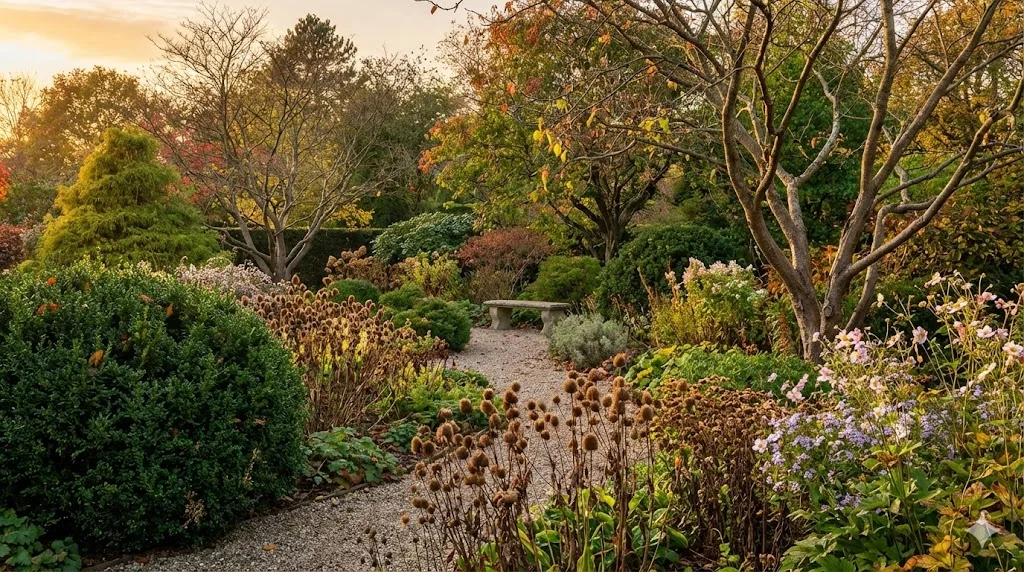
Planning a garden that looks beautiful in every season is the ultimate challenge in garden design — and the ultimate reward. A four-season garden does not simply survive the off-months; it celebrates them. Spring bursts with bulbs and blossom, summer overflows with colour and fragrance, autumn blazes with foliage and fruit, and winter reveals the quiet beauty of structure, bark, and frost-kissed seed heads.
Achieving this requires a shift in thinking. Instead of designing for peak bloom, you design for continuous interest. Instead of filling borders with plants that all flower at the same time, you orchestrate a succession of moments that carry the garden from January to December without a gap. This guide gives you a practical, step-by-step approach to planning a four-season garden that works for any size of plot and any level of experience.
Step 1: Audit What You Have
Before planning what to add, understand what is already working. The best way to do this is a seasonal audit — a year-long observation exercise that reveals your garden's strengths and gaps.
The Monthly Walk
Commit to walking through your garden on the first of every month for a full year. Each time, record:
- What is in flower, in bud, or producing interesting foliage
- What areas feel empty, bare, or uninteresting
- Where the focal points are and whether they hold your attention
- How the light falls and how it changes through the year
If you have not done a full year of observation yet, start now and fill in the gaps with memory and photographs.
Creating a Seasonal Map
Draw a rough plan of your garden and colour-code it by season:
- Green for areas with spring interest
- Yellow for summer interest
- Orange for autumn interest
- Blue for winter interest
Areas with only one colour need attention. The goal is for every area to have at least two colours — ideally three. You can create a digital version of this seasonal map to experiment with changes before planting.
Step 2: Establish the Evergreen Framework
Evergreens are the foundation of a four-season garden. They provide structure, colour, and form when everything else is dormant. A good target is for evergreens to comprise roughly 25 to 35 percent of your total planting.
Choosing Your Evergreen Anchors
Every border needs at least one evergreen anchor — a plant that provides structure year-round. Choose based on your garden's scale:
- Small gardens: Sarcococca, Pittosporum tenuifolium, Osmanthus, compact hollies.
- Medium gardens: Yew, Portuguese laurel, Viburnum tinus, Photinia.
- Large gardens: Scots pine, Holm oak, cedar, large hollies.
Layering Evergreen Interest
Beyond structural shrubs and trees, layer in smaller evergreens for ground-level interest:
- Evergreen ferns (Polystichum, Dryopteris)
- Evergreen grasses and sedges (Carex, Luzula)
- Ground covers (Vinca, Pachysandra, Ajuga)
- Heucheras and bergenias for coloured foliage
"Evergreens are not just winter plants. They are the steady presence that gives the garden coherence in every season."
Step 3: Build a Bloom Succession Plan
Bloom succession is the art of ensuring that something is always flowering. This requires choosing plants whose bloom periods overlap slightly, creating a continuous chain of colour from January through December.
The Bloom Relay
Here is a month-by-month succession for a temperate garden. Adjust timing for your specific climate zone.
January: Snowdrops, witch hazel, winter jasmine, hellebores February: Cyclamen coum, winter aconites, early crocuses, Daphne March: Daffodils, early tulips, magnolias, primroses, pulmonarias April: Late daffodils, mid-season tulips, wallflowers, cherries, bleeding heart May: Alliums, irises, peonies, aquilegias, early geraniums June: Roses, delphiniums, foxgloves, sweet peas, salvias July: Lavender, agapanthus, echinaceas, daylilies, crocosmia August: Dahlias, hydrangeas, heleniums, phlox, Japanese anemones September: Asters, sedums, late dahlias, rudbeckias, Cyclamen hederifolium October: Late asters, grasses in flower, autumn crocuses, nerines November: Chrysanthemums (late), Mahonia, Viburnum bodnantense December: Witch hazel (early cultivars), Sarcococca, hellebores (early), winter jasmine
Identifying Gaps
Look at this calendar against your seasonal map. Where are the gaps? Most gardens struggle in three periods:
- The "May gap" — between spring bulbs fading and summer perennials starting
- The "August slump" — when early summer flowers are spent
- The "November void" — after autumn colour drops but before winter flowers appear
Targeted planting fills these specific gaps. For a detailed monthly breakdown, see our month-by-month garden design calendar.
Step 4: Design for Winter Silhouettes
Winter is where four-season design is won or lost. Without flowers to distract the eye, the garden must rely on form, texture, and structure.
Key Winter Design Elements
- Deciduous trees with good form: Trees like birch, oak, and beech have beautiful branch architecture visible only in winter.
- Ornamental bark: Silver birch, paperbark maple, and Prunus serrula provide colour and texture at trunk level.
- Coloured stems: Dogwoods (Cornus) and willows (Salix) produce vivid red, orange, and yellow stems in winter.
- Standing seed heads: Echinaceas, phlomis, grasses, and rudbeckias left uncut through winter create natural sculptures.
- Berries: Holly, cotoneaster, and pyracantha provide red, orange, and yellow berries that persist through winter.
Position these elements where they are visible from windows and along winter walking routes. For comprehensive guidance, see our post on winter garden interest.
Step 5: Think in Layers
A four-season garden uses vertical space as well as horizontal. Each layer provides opportunities for different seasonal interest:
The Canopy Layer (5m+)
Trees provide spring blossom, summer shade, autumn colour, and winter silhouette. One well-chosen tree can deliver four-season interest on its own:
- Amelanchier lamarckii: Spring blossom, summer foliage, spectacular autumn colour, delicate winter silhouette.
- Malus (crabapple): Spring blossom, summer shade, autumn fruit, winter bark.
- Acer griseum: Spring foliage, summer shade, fiery autumn colour, peeling cinnamon bark in winter.
The Shrub Layer (1–5m)
Shrubs provide structure and seasonal highlights. Choose a mix that covers all four seasons:
- Spring: Viburnum carlesii (fragrant blossom), Spiraea (white or pink clouds)
- Summer: Hydrangeas, Philadelphus (mock orange), buddleia
- Autumn: Callicarpa (purple berries), Euonymus alatus (fiery foliage)
- Winter: Cornus (coloured stems), Hamamelis (witch hazel), Sarcococca (fragrant flowers)
The Perennial Layer (0.3–1.5m)
This layer provides the most continuous change through the seasons. Plan for overlapping bloom periods and foliage that remains attractive even when not in flower.
The Ground Layer (0–0.3m)
Ground covers, small bulbs, and low perennials fill the base of borders and provide early-season colour:
- Spring: Crocuses, muscari, primroses, pulmonarias
- Summer: Geraniums, Alchemilla mollis, low salvias
- Autumn: Cyclamen hederifolium, autumn crocuses
- Winter: Evergreen ferns, Carex, snowdrops, winter aconites
Step 6: Use Repetition and Rhythm
A four-season garden with many different plants can feel chaotic without the unifying power of repetition. Choose two or three plants that appear throughout the garden to create visual rhythm:
- An ornamental grass like Calamagrostis 'Karl Foerster' repeated along a border provides structure from June through March.
- A single evergreen — say, clipped box balls — placed at intervals along a path creates a steady visual heartbeat.
- A groundcover like Geranium 'Rozanne' woven through borders ties different sections together with consistent blue-purple flowers from June to October.
"Repetition is the music of garden design. It turns a plant collection into a composition."
Step 7: Plan for Foliage, Not Just Flowers
Flowers are fleeting — most perennials bloom for three to six weeks. Foliage lasts for months. In a four-season garden, foliage selection is at least as important as flower selection.
Foliage Strategies
- Contrasting shapes: Pair bold, rounded leaves (hostas, bergenias) with fine, feathery foliage (ferns, grasses).
- Colour through foliage: Purple Heucheras, silver Artemisia, golden Hakonechloa, and blue hostas provide colour without flowers.
- Autumn foliage: Many plants offer spectacular autumn colour — Amsonia, Geranium macrorrhizum, deciduous ferns, Molinia grasses.
- Evergreen foliage: Heucheras, bergenias, epimediums, and evergreen ferns carry foliage interest through winter.
Step 8: Test and Refine
A four-season garden is never truly finished. It evolves as plants mature, as your climate changes, and as your own tastes develop. The best approach is iterative:
- Plant based on your plan, focusing first on the structural framework (evergreens, trees, key shrubs).
- Observe for a full year before making major adjustments.
- Fill gaps with targeted additions each autumn and spring.
- Move plants that are not working — wrong position, wrong companions, wrong season.
- Record what works so you can replicate successful combinations in other parts of the garden.
Getting Started This Season
Planning a four-season garden is a journey, not a weekend project. But every journey starts with a single step. Here are three things to do right now:
- Count your evergreens. Walk through your garden and count the evergreen plants. If they make up less than a quarter of your planting, add one or two this season.
- Identify your weakest month. Which month does your garden look least interesting? Research three plants that provide interest in that month and plan to add them.
- Choose one tree. If you do not have a multi-season tree, plant one this year. An Amelanchier or a paperbark maple will give you four seasons of interest from a single planting hole.
Garden Design Team
Expert garden designers sharing tips, inspiration, and practical advice for creating beautiful outdoor spaces.
Explore professional garden design
Gardenly3D is a paid professional garden-design application. See plans for included capabilities and availability.
Join the waitlistRelated articles
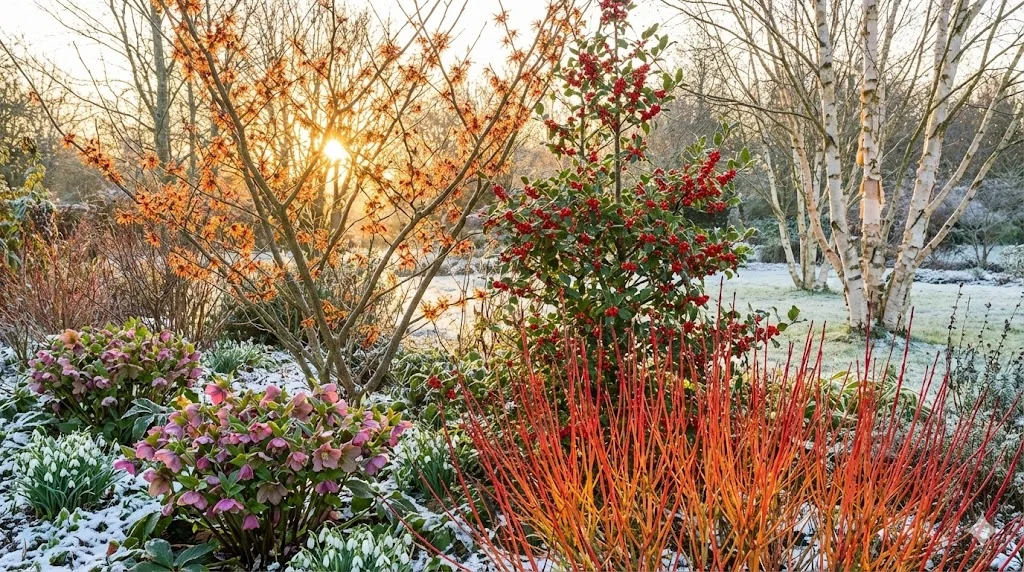
Best Plants for Winter Color and Berries
Discover the best plants for winter color and berries, including winterberry holly, dogwood stems, witch hazel, snowdrops, hellebores, and ornamental bark.
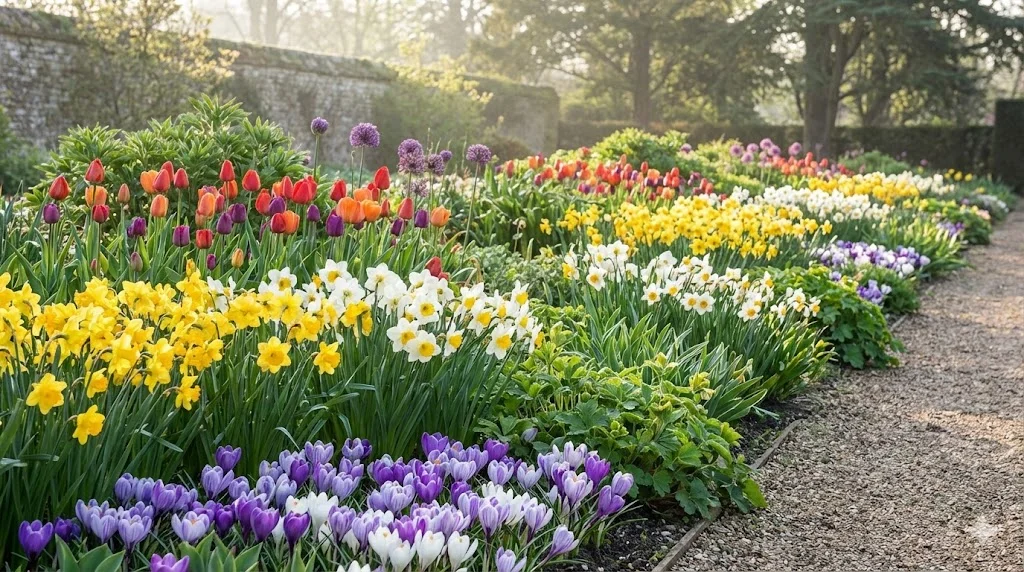
Best Spring Bulbs for Garden Design Impact
Discover the best spring bulbs for garden design impact, from tulips and alliums to layered bulb planting techniques for weeks of spectacular colour.
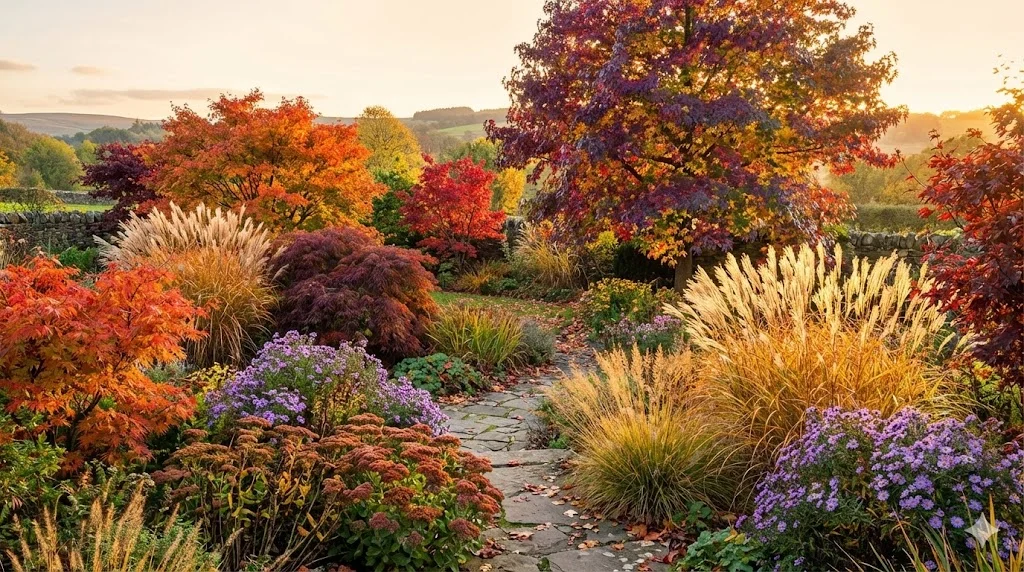
Designing for Autumn Color: Trees, Shrubs, and Perennials
Design for spectacular autumn color with the best trees, shrubs, and perennials for fall foliage including Japanese maples, ornamental grasses, and warm palettes.