
Late Summer and Early Fall: Bridging the Garden Gap
Bridge the late summer garden gap with plants that bloom August through October, including grasses, sedums, asters, and strategies for extending the season.
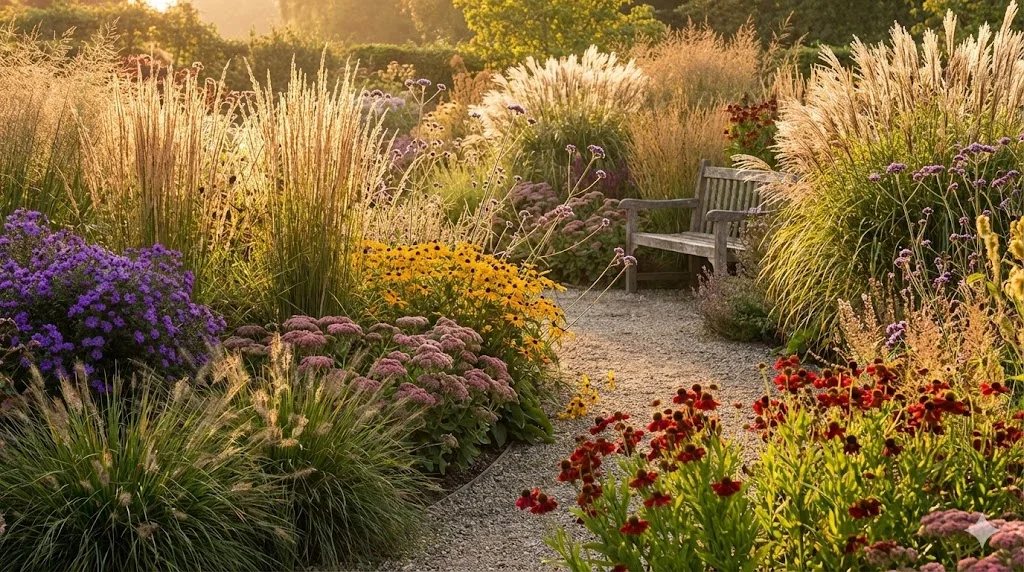
Late Summer and Early Fall: Bridging the Garden Gap
There is a period in every garden — typically from mid-August through mid-October — that tests even the most experienced gardeners. The early summer stars have finished. Roses have moved past their first flush. Delphiniums and lupins are spent. Yet autumn, with its blaze of foliage colour, has not quite arrived. This is the garden gap: a lull that can make borders look tired, sparse, and past their prime.
But it does not have to be this way. Some of the most beautiful, resilient, and design-worthy plants peak during exactly this period. With thoughtful selection and placement, the late summer and early fall garden can be not just a bridge between seasons but a destination in its own right — warm, rich, and luminous with the particular golden light that only September brings.
Understanding the Late Summer Shift
The character of light changes dramatically between July and September. Summer's overhead, white-hot sun gives way to a lower, warmer, more amber light that rakes across borders at an angle. This light transforms how plants look. Grasses that appeared ordinary in July become radiant in September, their seed heads catching and scattering light like fibre optics. Warm-toned flowers — ambers, coppers, russetts — that might feel heavy in June glow with extraordinary richness in the slanting light of early autumn.
Understanding this light shift is key to designing for the late season. Plants chosen for this period should work with the warm, directional light rather than against it. Translucent seed heads, airy flower structures, and warm colour tones are the building blocks of a successful late-season border.
"The late summer garden is lit differently. Design for the angle, the warmth, the particular gold of September light, and the plants will do the rest."
The Essential Late-Season Plants
Ornamental Grasses
If any single plant group defines the late summer and early fall garden, it is ornamental grasses. They come into their own from August onwards, providing movement, texture, and light-catching qualities that no other group of plants can match.
- Miscanthus sinensis 'Malepartus' — tall, upright, with feathery red-brown plumes that age to silver. Spectacular backlit by low sun.
- Calamagrostis x acutiflora 'Karl Foerster' — narrow, upright habit with buff-coloured plumes. Architectural and reliable.
- Panicum virgatum 'Shenandoah' — red-tipped foliage that deepens through autumn. Open, airy flower heads.
- Molinia caerulea 'Transparent' — tall, ethereal stems with tiny flower heads that seem to float. Extraordinary in mass.
- Stipa gigantea — golden oat grass. Its huge, open panicles catch every breath of wind and every ray of light.
Asters
Asters are the quintessential autumn flower. No group of plants provides as much late-season colour with as little effort.
- Aster x frikartii 'Monch' — lavender-blue daisies from July to October. One of the longest-flowering perennials available.
- Symphyotrichum novae-angliae 'Violetta' — deep violet-purple. Bold and vigorous.
- Symphyotrichum 'Little Carlow' — masses of small, violet-blue flowers on arching stems. One of the best.
- Aster amellus 'King George' — large, rich violet-blue flowers. Compact and mildew-resistant.
Sedums
Sedums (now technically Hylotelephium) provide a unique combination of late-summer flowers, interesting foliage, and outstanding winter seed heads.
- Hylotelephium 'Herbstfreude' (Autumn Joy) — the classic, with flat heads that transition from green to pink to russet to brown.
- Hylotelephium 'Matrona' — dusky pink flowers on dark stems with purple-flushed foliage.
- Hylotelephium 'Purple Emperor' — deep purple foliage and dusky pink flowers. Dramatic.
Rudbeckias
Black-eyed Susans are powerhouse late-summer performers. Their golden-yellow daisies with dark centres are the definitive colour of the late-season garden.
- Rudbeckia fulgida var. deamii — golden daisies from August to October. Reliable, spreading, and unfussy.
- Rudbeckia laciniata 'Herbstsonne' — tall (2m+), with large lemon-yellow flowers. A border back plant of great character.
- Rudbeckia triloba — clouds of small, dark-eyed daisies. Short-lived but self-seeds freely.
Dahlias
Dahlias bridge late summer and autumn with unmatched generosity, flowering from July right up to the first frost.
- Dahlia 'Bishop of Llandaff' — scarlet flowers with dark bronze foliage. The most design-worthy dahlia.
- Dahlia 'Cafe au Lait' — enormous dinner-plate flowers in creamy coffee tones. A statement plant.
- Dahlia 'David Howard' — rich apricot-orange with dark foliage. Warm and refined.
Japanese Anemones
Japanese anemones fill a unique niche — elegant, shade-tolerant perennials that flower from August to October.
- Anemone x hybrida 'Honorine Jobert' — pure white flowers with golden centres. A classic.
- Anemone hupehensis 'Hadspen Abundance' — deep rose-pink. Beautiful in woodland edges.
Additional Late-Season Performers
- Helenium — warm amber, orange, and red daisies from July to September.
- Actaea simplex — tall spikes of fragrant white flowers above dark foliage. September to October.
- Persicaria amplexicaulis — thin red or pink pokers from July to the first frost. Incredibly long-flowering.
- Verbena bonariensis — tall, see-through stems topped with purple flower clusters. Self-seeds freely.
- Anemanthele lessoniana — the pheasant's tail grass, with bronze-orange foliage that intensifies in autumn.
Design Strategies for the Late-Season Border
The Prairie-Style Approach
The naturalistic or prairie-style border is perfectly suited to the late season. Grasses and late-flowering perennials are interplanted in a matrix that mimics natural grassland communities. The result is a border that peaks from August to November and then provides winter interest through standing seed heads.
A simple prairie-style combination:
- Back: Miscanthus sinensis 'Malepartus' + Rudbeckia laciniata 'Herbstsonne'
- Middle: Aster 'Little Carlow' + Helenium 'Moerheim Beauty' + Panicum virgatum 'Shenandoah'
- Front: Sedum 'Herbstfreude' + Persicaria amplexicaulis 'Firetail' + Calamagrostis 'Karl Foerster'
Warm Colour Waves
Late-season light favours warm colours. Design borders with waves of complementary warm tones:
- Gold and amber: Rudbeckias + Heleniums + Calamagrostis
- Copper and rust: Helenium 'Moerheim Beauty' + Dahlia 'David Howard' + Anemanthele lessoniana
- Purple and silver: Asters + Verbena bonariensis + Miscanthus (silver plumes)
The Cool Contrast
Against the prevailing warmth, pockets of cool colour create striking contrast:
- White Japanese anemones among warm grasses
- Blue asters interplanted with golden rudbeckias
- Purple Verbena bonariensis threading through amber-toned borders
"The late-season garden is a place of paradox — the richest colours arrive just as the year begins to fade."
Extending the Season: Practical Techniques
Beyond plant selection, several techniques help extend the late-season display:
Cutting Back for a Second Flush
Some perennials that finish in June can be cut back hard to produce a second (shorter) flush in August and September:
- Geraniums — the Chelsea Chop (cutting back by half in late May) produces bushier plants with later flowers.
- Delphiniums — cut to the base after the first flush for a second, shorter display.
- Nepeta — shear after the first flowering for a fresh mound of blue in September.
- Salvia nemorosa — cut back spent flower stems for repeat flowering.
Successive Sowing
Sow annuals in stages through spring for staggered flowering:
- Cosmos sown in May flowers August to October.
- Zinnias sown in succession provide colour through the entire late season.
- Sunflowers planted at three-week intervals ensure continuous bloom.
Strategic Deadheading
Regular deadheading from midsummer onwards redirects the plant's energy into new flowers rather than seed production. Dahlias, roses, and many annuals flower significantly longer with consistent deadheading.
Feeding Through Summer
A liquid feed every two weeks from July through September keeps late-flowering perennials and containers performing at their best during this critical period.
Planning for the Transition to Autumn
The late-season garden does not end abruptly — it transitions into full autumn. Plan for this overlap:
- Grasses that flower in August reach peak beauty in October and November, then provide winter structure.
- Sedums transition from flower to seed head, their russet tones deepening through autumn.
- Many asters flower well into November if the weather is mild.
- Dahlia displays end only with the first hard frost — in mild areas, this may not come until December.
When you map out your seasonal planting plan, you can visualise how each plant carries the display from late summer through autumn and into winter, ensuring there are no blank periods.
For guidance on what comes next, see our posts on designing for autumn colour and fall garden preparation.
Getting Started
If your garden currently goes quiet in August, these three additions will have the biggest immediate impact:
- Plant three ornamental grasses. Choose Calamagrostis 'Karl Foerster' for structure and Miscanthus for volume. They will transform the late-season feel of any border.
- Add a drift of asters. 'Little Carlow' or Aster x frikartii 'Monch' are nearly indestructible and flower for months.
- Include late-season warm tones. Rudbeckias and heleniums planted now will establish and flower next year, filling the gap with exactly the warm, golden colour that late-season light celebrates.
The period from August to October need not be a gap in your garden — it can be one of its finest seasons. For the complete year-round picture, see our seasonal planning guide.
Garden Design Team
Expert garden designers sharing tips, inspiration, and practical advice for creating beautiful outdoor spaces.
Explore professional garden design
Gardenly3D is a paid professional garden-design application. See plans for included capabilities and availability.
Join the waitlistRelated articles
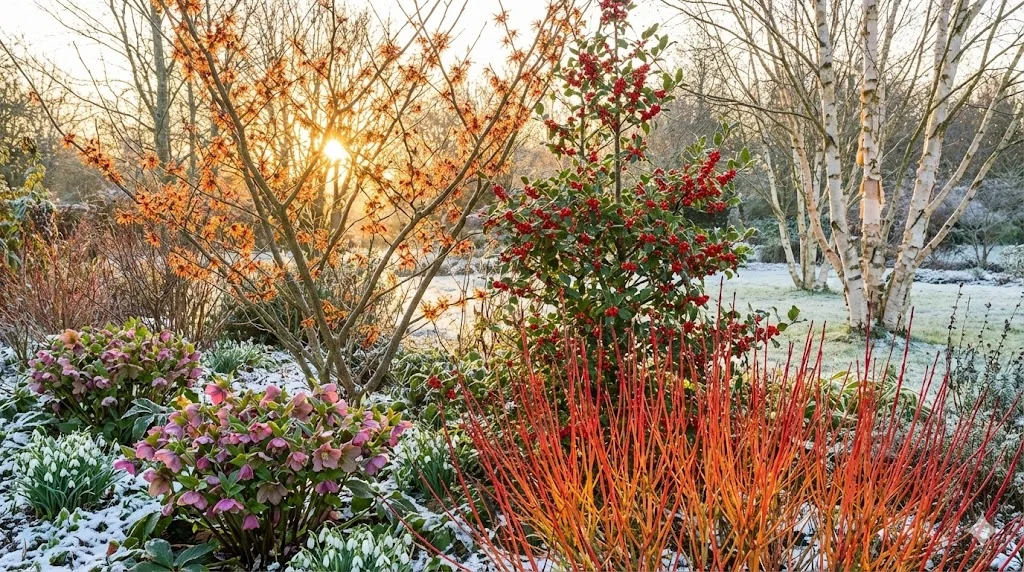
Best Plants for Winter Color and Berries
Discover the best plants for winter color and berries, including winterberry holly, dogwood stems, witch hazel, snowdrops, hellebores, and ornamental bark.
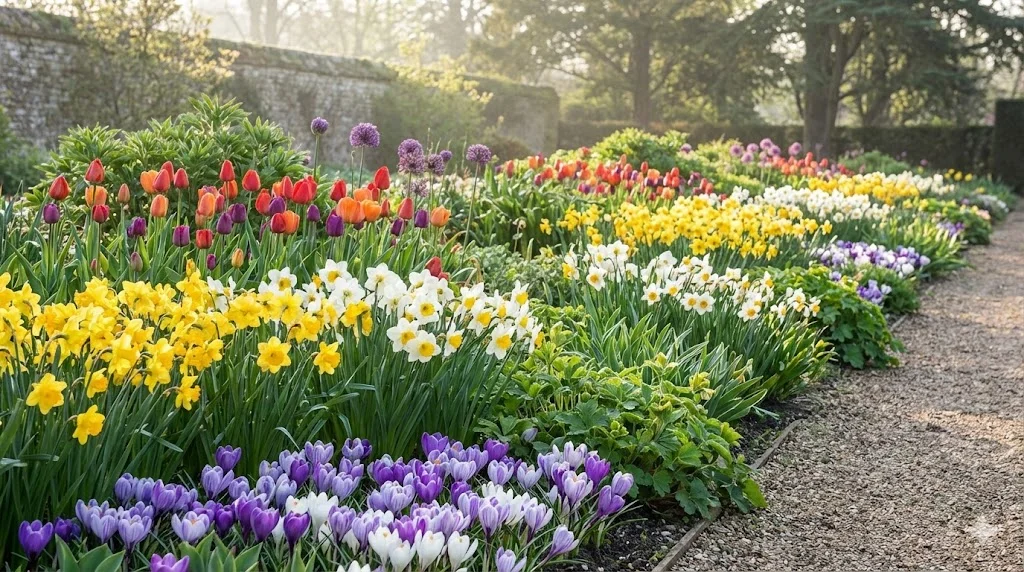
Best Spring Bulbs for Garden Design Impact
Discover the best spring bulbs for garden design impact, from tulips and alliums to layered bulb planting techniques for weeks of spectacular colour.
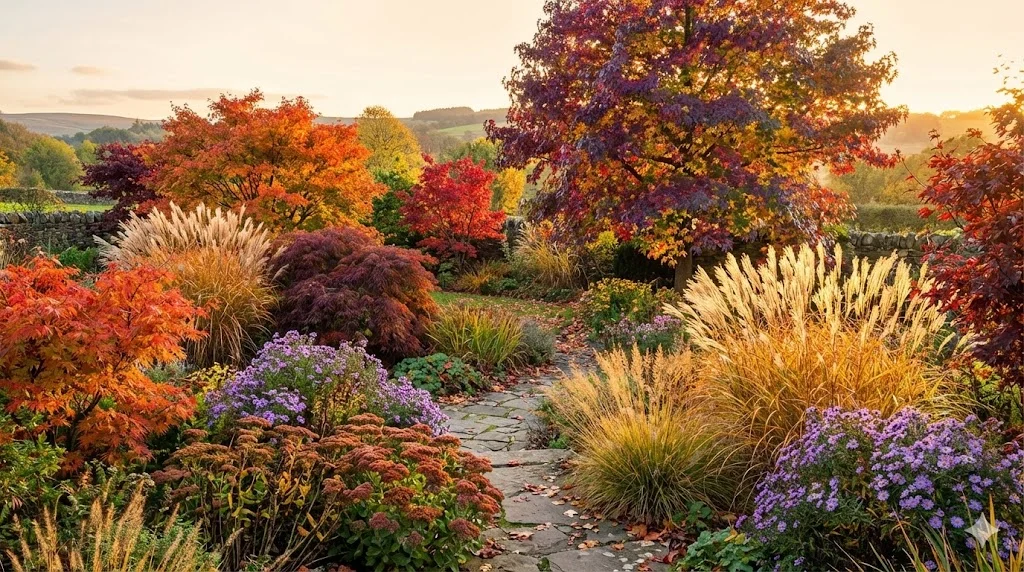
Designing for Autumn Color: Trees, Shrubs, and Perennials
Design for spectacular autumn color with the best trees, shrubs, and perennials for fall foliage including Japanese maples, ornamental grasses, and warm palettes.