
Wildlife-Friendly Garden Design: Habitat for Birds and Hedgehogs
Design a wildlife-friendly garden with habitats for birds, hedgehogs, and beneficial insects using log piles, hedgehog highways, berry plants, and water.
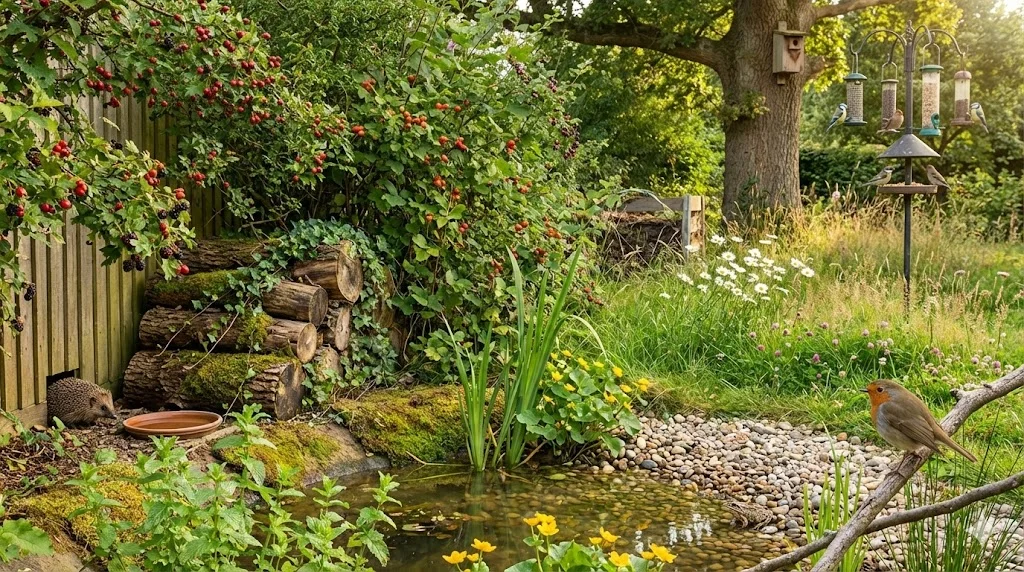
Wildlife-Friendly Garden Design: Habitat for Birds and Hedgehogs
Private gardens collectively cover more land area than all the nature reserves in many countries combined. This makes gardens — your garden — one of the most significant habitats for wildlife in the modern landscape. A single garden designed with wildlife in mind can support dozens of bird species, hundreds of insect species, amphibians, mammals, and a rich web of soil organisms. Scale that across a neighbourhood, a town, or a country, and the impact is extraordinary.
Wildlife-friendly garden design is not about turning your garden into a wilderness. It is about making thoughtful design decisions that create habitat while maintaining a beautiful, functional outdoor space. A well-placed log pile, a gap in a fence, a berry-bearing hedge, a shallow pond — these are simple additions that transform a garden from an ecological desert into a living, breathing ecosystem.
The Three Essentials: Food, Water, Shelter
Every wildlife-friendly garden provides three things: food, water, and shelter. Get these right, and wildlife will find you.
Food
Different creatures need different food sources at different times of year:
- Nectar and pollen for bees, butterflies, and hoverflies — from spring bulbs through summer perennials to autumn asters. Aim for flowers in every month from February to November.
- Seeds and grain for birds — leave seed heads standing through autumn and winter. Echinaceas, rudbeckias, teasels, and grasses all provide natural bird food.
- Berries and fruit for birds and mammals — holly, hawthorn, rowan, crabapple, cotoneaster, and pyracantha provide autumn and winter food.
- Caterpillar food plants — many butterfly and moth species require specific plants for their larvae. Native plants are far more valuable than exotics for supporting caterpillars.
- Supplemental feeding — bird feeders stocked with high-quality seed, fat balls, and mealworms support birds through winter when natural food is scarce.
Water
Water is often the missing element in wildlife gardens. Even a small water source makes a dramatic difference:
- A wildlife pond — even a small one (1 metre across) can support frogs, newts, dragonflies, and dozens of other species. Include sloping edges so creatures can access the water safely.
- A bird bath — placed at height, cleaned regularly, and kept topped up. Birds need water for drinking and bathing year-round.
- A shallow dish at ground level — for hedgehogs, insects, and ground-dwelling creatures.
- A dripping or moving water source — the sound of moving water attracts birds from a considerable distance.
Shelter
Wildlife needs places to nest, breed, hibernate, and shelter from weather and predators:
- Dense hedges — native hedges of hawthorn, blackthorn, hazel, and dog rose provide nesting sites, food, and shelter for birds, insects, and small mammals.
- Log piles — stacked logs left in a shady corner create habitat for beetles, centipedes, fungi, slow worms, and hibernating hedgehogs.
- Leaf litter — resist the urge to clear every fallen leaf. A layer of leaf litter in borders and under hedges provides habitat for overwintering insects, which in turn feed birds.
- Dense shrubs — evergreen shrubs like holly, yew, and laurel provide shelter from winter weather and safe nesting sites.
- Dry stone walls — gaps and crevices in walls provide homes for solitary bees, spiders, and lizards.
- Undisturbed corners — every garden benefits from at least one area left alone — a patch of nettles, a tangle of bramble, or a section of long grass.
"The untidiest corner of your garden may be the most valuable for wildlife. Resist the urge to tidy everything."
Designing for Birds
Birds are the most visible and audible wildlife in any garden. Designing for them brings life, movement, and song into your outdoor space.
Planting for Birds
- Berry-bearing shrubs and trees: Hawthorn, rowan, elderberry, holly, cotoneaster, pyracantha, crabapple, and Rosa rugosa provide food through autumn and winter.
- Seed-bearing perennials: Leave spent flower heads of echinaceas, rudbeckias, teasels, sunflowers, and grasses standing through winter.
- Dense hedging: Provides nesting sites. Native mixed hedges are ideal — a combination of hawthorn, blackthorn, hazel, field maple, and dog rose supports the widest range of species.
- Trees: Even a single tree provides roosting sites, nesting platforms, and food. Native trees like oak, birch, and willow support the most insect species, which in turn feed insectivorous birds.
Bird Boxes
Supplement natural nesting sites with bird boxes positioned:
- At least 2 metres above ground level
- Facing north or east (to avoid overheating)
- Sheltered from prevailing rain
- Away from disturbance and predator access
Different box designs attract different species — open-fronted boxes for robins and wrens, hole-fronted boxes for blue tits and great tits, larger boxes for starlings and house sparrows.
Feeding Stations
A well-stocked feeding station is the quickest way to attract birds. Position feeders:
- Near cover (so birds can retreat from predators) but with a clear sightline (so they can watch for danger).
- Away from windows (to reduce collision risk) or very close to windows (within 0.5 metres, so birds do not build up speed if they do fly toward the glass).
- At different heights — ground feeders for robins, thrushes, and blackbirds; hanging feeders for tits, finches, and siskins; table feeders for a mix of species.
Designing for Hedgehogs
Hedgehogs are in serious decline across much of Europe. Garden design plays a critical role in their survival.
Hedgehog Highways
Modern fencing creates impenetrable barriers between gardens, fragmenting hedgehog habitat. A single hedgehog needs to roam up to 2 kilometres each night to find food and mates.
The solution is simple: create hedgehog highways — 13 cm x 13 cm gaps at the base of fences and walls that allow hedgehogs to pass between gardens. Talk to your neighbours and create a connected network.
Hedgehog Habitat
- Log piles: Hedgehogs hibernate in log piles, leaf piles, and compost heaps. Leave undisturbed piles in quiet corners.
- Long grass areas: Hedgehogs hunt for beetles, slugs, and worms in long grass. A patch of unmown lawn provides feeding habitat.
- Compost heaps: A favourite hibernation and nesting spot. Check before turning or forking.
- Dense shrub cover: Low, dense planting provides daytime sleeping spots and shelter from predators.
Hedgehog Safety
- Check before strimming: Always check long grass and edges before using a strimmer.
- No slug pellets: Metaldehyde slug pellets are lethal to hedgehogs. Use nematodes or beer traps instead.
- Provide water: A shallow dish of water, refreshed daily. Never milk — it makes hedgehogs seriously ill.
- Check bonfires: Hedgehogs shelter in bonfire piles. Build bonfires on the day you light them, or check thoroughly before lighting.
- Cover drains and holes: Hedgehogs fall into uncovered drains, cattle grids, and deep-sided ponds. Provide escape ramps or covers.
Creating a Wildlife Pond
A pond is the single most effective addition for garden wildlife. Even a small pond attracts frogs, newts, dragonflies, damselflies, water beetles, pond skaters, and visiting birds and mammals.
Pond Design Principles
- Size: Any size works, but bigger is better for biodiversity. Even a half-barrel sunken into the ground creates habitat.
- Depth: Include a range of depths — shallow margins (5 to 10 cm) for access and breeding, and a deeper section (at least 60 cm) that does not freeze solid in winter.
- Edges: Gently sloping edges allow creatures to enter and leave safely. Include a "beach" of pebbles and stones.
- Planting: Use native aquatic plants — water mint, marsh marigold, water forget-me-not, purple loosestrife, and oxygenating plants.
- No fish: Fish eat tadpoles, larvae, and other pond life. A wildlife pond is fishless.
- Location: Part sun, part shade. Avoid overhanging trees that drop excessive leaves.
- No chemicals: Never treat a wildlife pond with algaecides or other chemicals. A balanced pond regulates itself.
The Wildlife-Friendly Lawn
A traditional closely mown lawn supports almost no wildlife. Simple changes transform it:
- Mow less frequently: Mowing every two to three weeks instead of weekly allows clover and other small flowers to bloom, providing food for pollinators.
- Create a mown path: Mow paths through longer grass for a deliberate, designed look while leaving the rest to grow.
- Allow clover: White clover in lawns fixes nitrogen (reducing fertiliser need) and provides nectar for bees.
- Leave a wild patch: Designate a section of lawn to grow long from March to September. Cut once in late September and remove the cuttings.
For more lawn alternatives, see our guide to no-mow garden design.
Designing for Insects
Insects are the foundation of the garden food web. Everything else — birds, amphibians, hedgehogs — depends on a healthy insect population.
- Plant for continuous bloom: Ensure something is flowering in every month from February to November. See our guide to pollinator-friendly garden design.
- Include native plants: Native plants support specialist pollinators that cannot use exotic flowers.
- Provide nesting habitat: Bare, south-facing soil banks for mining bees. Hollow stems (bundled bamboo, drilled logs) for cavity-nesting bees. Dead wood for beetle larvae.
- Eliminate pesticides: Even organic pesticides harm beneficial insects. A diverse garden controls pests naturally.
- Leave stems standing: Many solitary bees and other insects overwinter in hollow plant stems. Do not cut back perennials until spring.
"Insects are not garden pests — they are the workforce that makes everything else in your garden possible."
Bringing It All Together
A wildlife-friendly garden is not a separate project from a beautiful garden. The two are the same thing. When you design your garden layout, integrate wildlife features from the start — a pond as a focal point, a native hedge as a boundary, a log pile tucked behind a specimen shrub, a bird feeding station positioned for viewing from a kitchen window.
Getting Started with Wildlife Gardening
Three actions that will make an immediate difference:
- Create a hedgehog highway. Cut or drill a 13 cm x 13 cm hole in one fence panel. Talk to your neighbours and encourage them to do the same. A connected garden network is a connected wildlife corridor.
- Add a water source. Even a shallow dish of water placed at ground level provides drinking and bathing water for birds, hedgehogs, and insects. A bird bath or small pond amplifies the effect enormously.
- Leave one area undisturbed. Stop mowing one corner. Leave a log pile. Let some leaf litter accumulate. This single act of benign neglect creates more wildlife habitat than any amount of active management.
For the broader context of sustainable garden design, visit our sustainable garden design guide.
Garden Design Team
Expert garden designers sharing tips, inspiration, and practical advice for creating beautiful outdoor spaces.
Explore professional garden design
Gardenly3D is a paid professional garden-design application. See plans for included capabilities and availability.
Join the waitlistRelated articles
Carbon-Positive Garden Design: Sequestering Carbon at Home
Design a carbon-positive garden that sequesters carbon through tree planting, biochar, peat-free growing, reduced hardscape, and soil health strategies.
Composting and Soil Health for Garden Designers
Master composting and soil health for better garden design with guidance on the soil food web, composting methods, mulch types, no-dig gardening, and more.
No-Mow Garden Design: Lawn Alternatives That Thrive
Explore no-mow garden design with lawn alternatives that thrive, including clover lawns, creeping thyme, moss gardens, meadow patches, and ground covers.