
Sustainable Garden Design Guide: Eco-Friendly Landscaping
A comprehensive guide to sustainable garden design covering eco-friendly landscaping, water conservation, biodiversity, carbon-positive gardening, and more.
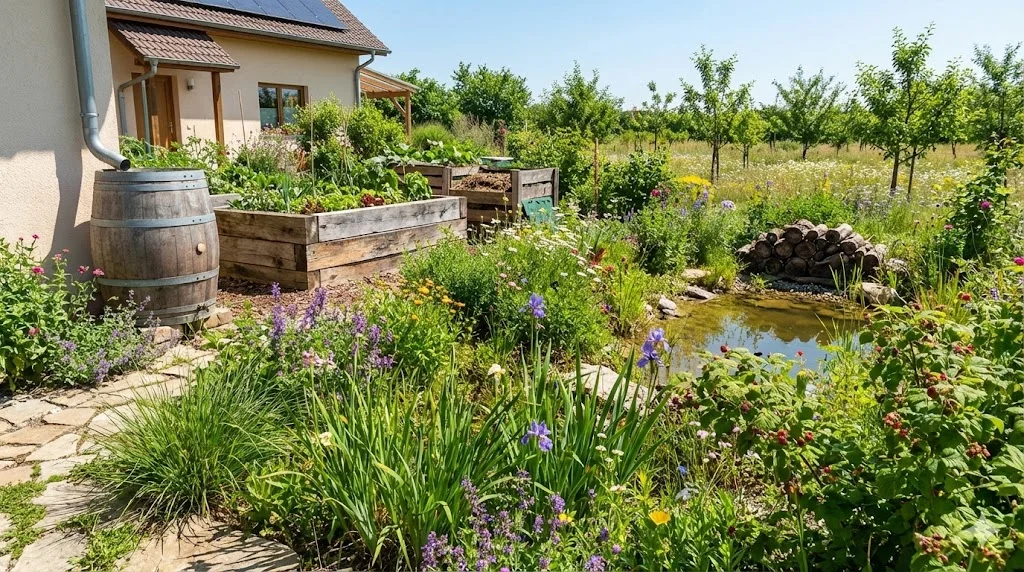
Sustainable Garden Design Guide: Eco-Friendly Landscaping
Gardens are among our most powerful tools for environmental good. A single well-designed garden can capture carbon, filter rainwater, support hundreds of species of insects and birds, build healthy soil, and produce food — all while being a beautiful, restorative space for people. Sustainable garden design is the practice of creating outdoor spaces that work with nature rather than against it, reducing environmental harm while maximizing ecological benefit.
This is not about sacrifice. A sustainable garden is not a neglected garden. It is not a compromise between beauty and ethics. The most sustainably designed gardens are often the most beautiful, because they work with the grain of nature — choosing plants adapted to their conditions, building healthy soil that supports vigorous growth, and creating habitats that bring life and movement into the garden.
This guide covers the core principles of sustainable garden design and links to detailed guides on each topic. Whether you are designing a new garden from scratch or greening an existing one, these principles will help you create a space that is good for you and good for the planet.
The Seven Principles of Sustainable Garden Design
1. Work with Your Site
The foundation of sustainable design is understanding your site — its soil, aspect, microclimate, rainfall, and existing ecology — and working with these conditions rather than fighting them.
- Soil: Design for the soil you have. Choose plants that thrive in your conditions rather than importing soil or constantly amending.
- Aspect: Place sun-loving plants in sun and shade-lovers in shade. This sounds obvious, but many gardens fight their aspect, leading to stressed plants that need constant support.
- Water: Understand where water naturally flows on your site. Design to capture and use it rather than piping it away.
- Existing ecology: Work with what is already there — mature trees, established hedgerows, natural drainage patterns — rather than clearing and starting from scratch.
2. Conserve Water
Water is becoming an increasingly precious resource. Sustainable gardens minimise water use through smart design rather than sprinklers.
- Choose drought-tolerant plants for the driest parts of your garden.
- Mulch generously to reduce evaporation.
- Collect rainwater in butts and cisterns.
- Install drip irrigation where watering is needed — it uses 50 to 70 percent less water than overhead sprinklers.
- Design rain gardens to capture and filter stormwater runoff.
For comprehensive guidance, see our posts on water-wise garden design and xeriscaping.
3. Build Healthy Soil
Healthy soil is the foundation of a sustainable garden. It supports plant health, sequesters carbon, filters water, and hosts billions of organisms.
- Add compost annually to build organic matter.
- Minimise digging — no-dig methods preserve soil structure and fungal networks.
- Use organic mulches that break down and feed the soil.
- Avoid chemical fertilisers and pesticides that harm soil biology.
- Grow green manures over bare soil in winter to prevent erosion and fix nitrogen.
Our guide on composting and soil health covers these practices in detail.
4. Support Biodiversity
A sustainable garden is a biodiverse garden. Every plant, structure, and management decision can either support or diminish the web of life in your garden.
- Plant native species alongside ornamental plants. Natives support specialist pollinators and food chains that ornamentals cannot.
- Create habitats: Log piles, hedgehog highways, bird boxes, wildflower patches, and undisturbed corners all provide homes for wildlife.
- Eliminate pesticides. Even organic pesticides disrupt food chains. A diverse garden finds its own balance.
- Provide water. A shallow dish, a bird bath, or a wildlife pond supports birds, insects, amphibians, and mammals.
- Plant for year-round nectar and pollen. Pollinators need food from February to November — not just in summer.
See our detailed guides on wildlife-friendly garden design and pollinator-friendly design beyond the bee hotel.
"A garden that supports biodiversity is not just good for nature — it is a more resilient, more interesting, and more beautiful garden."
5. Choose Sustainable Materials
Every material in your garden — from paving to fencing to the compost you buy — has an environmental footprint. Sustainable choices at the design stage have the biggest impact.
- Prioritise reclaimed and recycled materials: Reclaimed brick, salvaged stone, and recycled composites reduce demand for new quarrying and manufacturing.
- Choose permeable surfaces: Gravel, permeable pavers, and resin-bound surfaces allow rainwater to drain naturally, reducing flooding and recharging groundwater.
- Use FSC-certified timber for raised beds, fencing, and structures.
- Source locally: Local stone and materials reduce transport emissions and often look more appropriate in the landscape.
- Go peat-free: Peat extraction destroys irreplaceable habitats. Use peat-free composts and growing media exclusively.
Our guide on sustainable materials for garden hardscape provides a comprehensive overview.
6. Reduce, Reuse, Recycle
Sustainable gardens generate minimal waste and make the most of available resources.
- Compost all garden waste. Leaves, prunings, grass clippings, and weeds (before they seed) become valuable compost.
- Make leaf mould. Fallen leaves stored in wire bins or bags become the finest soil conditioner available — free and endlessly renewable.
- Reuse and repurpose. Old pots, timber offcuts, broken concrete — all can find new life in a creative garden.
- Reduce purchasing. Propagate plants from cuttings and divisions. Swap plants with neighbours. Collect your own seed.
- Choose durability. Invest in quality tools, materials, and plants that last decades rather than cheap items that need frequent replacement.
7. Think Long-Term
Sustainable design is inherently long-term thinking. It favours perennials over annuals, trees over bedding, permanent structure over temporary display.
- Plant trees. A single tree can sequester tonnes of carbon over its lifetime while providing shade, habitat, and beauty.
- Establish perennial planting. Perennial borders, once established, require far less input than annual bedding schemes.
- Design for maturity. Plan how your garden will look in ten and twenty years, not just next summer.
- Adapt to change. As climate patterns shift, be willing to change plant choices and management practices.
Water Conservation in Practice
Water conservation goes far beyond simply watering less. It is a design philosophy that shapes plant selection, layout, and infrastructure.
Zoning by Water Need
Divide your garden into water zones:
- Oasis zone (near the house): Where you concentrate higher-water-need plants and food crops, irrigated efficiently.
- Transition zone: Moderate water use, with adapted perennials and shrubs.
- Dry zone (furthest from the house): Drought-tolerant plants that survive on natural rainfall alone.
This zoning principle is central to xeriscaping — see our full guide on xeriscaping and water-wise design.
Rain Gardens
A rain garden is a planted depression that captures and filters stormwater runoff from roofs, driveways, and paved areas. It reduces flooding, recharges groundwater, and creates a beautiful, biodiverse garden feature. Rain gardens are one of the most effective sustainable design interventions you can make.
Grey Water and Rainwater Harvesting
Collected rainwater and recycled household grey water (from baths, showers, and washing machines) can significantly reduce mains water use in the garden. See our guide on reducing your water footprint.
Biodiversity by Design
Biodiversity is not something you add to a garden after the design is done — it is built into the design from the start.
The Three Habitat Pillars
Every wildlife-friendly garden needs:
- Food: Nectar-rich flowers, berry-producing shrubs, seed-bearing perennials, and food plants for caterpillars.
- Water: A pond, stream, bird bath, or even a shallow dish provides drinking and bathing water for birds, insects, and mammals.
- Shelter: Hedges, log piles, leaf litter, dense shrubs, hollow stems, and undisturbed corners provide nesting and overwintering sites.
Lawn Alternatives
Traditional closely mown lawns are ecological deserts. Sustainable alternatives include clover lawns, wildflower meadow patches, creeping thyme, and moss gardens. Each provides ground cover while supporting far more wildlife than a manicured lawn. See our guide on no-mow garden design and lawn alternatives.
Carbon-Positive Gardening
Gardens can be net carbon sinks — absorbing more carbon than they emit. This is achieved through:
- Tree planting: Trees are the most effective carbon storage mechanism available to gardeners.
- Building soil organic matter: Healthy soil stores vast quantities of carbon. Compost, mulch, and no-dig practices all increase soil carbon.
- Reducing hardscape: Paved and concreted areas represent embodied carbon. Reducing hardscape and increasing planted areas tips the balance toward carbon sequestration.
- Using biochar: Biochar — charcoal produced by pyrolysis — locks carbon into soil for centuries while improving soil structure and fertility.
- Going peat-free: Peatlands store twice as much carbon as all the world's forests. Using peat-free products protects these vital carbon stores.
For a deep dive, see our guide on carbon-positive garden design.
Permaculture Principles in Garden Design
Permaculture offers a holistic framework for sustainable garden design that goes beyond individual techniques to address the garden as an integrated system.
Key permaculture principles applicable to any garden include:
- Observe and interact: Spend time understanding your site before making changes.
- Catch and store energy: Harvest rainwater, compost nutrients, and capture sunlight with productive planting.
- Produce no waste: Compost, reuse, and close the loop.
- Use and value renewable resources: Rely on living systems (plants, soil organisms) rather than purchased inputs.
- Integrate rather than segregate: Mix functions — a hedge can be a windbreak, a wildlife corridor, a food source, and a design element simultaneously.
See our full guide on permaculture garden design.
Getting Started with Sustainable Garden Design
Sustainability is a journey, not a destination. You do not need to transform your entire garden overnight. Start with these high-impact actions:
- Stop using peat. Switch to peat-free compost for all your gardening. This single action protects one of the planet's most important carbon stores.
- Create one wildlife habitat. A log pile in a corner, a shallow water dish, or a patch of nettles left to grow provides immediate benefit to wildlife. Small habitats add up.
- Plant one tree. Even in a small garden, a single tree provides shade, absorbs carbon, supports wildlife, and adds beauty. Choose a native species or a multi-purpose tree that also provides fruit, blossom, or autumn colour.
"Every garden, no matter how small, can be part of the solution. Sustainability is not about perfection — it is about direction."
When you plan your sustainable garden design, you can map out water zones, habitat areas, and planting schemes that work together as an integrated system. The result is a garden that is beautiful, productive, and ecologically rich — a space that gives back to the environment while providing you with a place of peace, beauty, and connection to the natural world.
The detailed guides linked throughout this article dive deeper into each aspect of sustainable garden design. Start with the areas that interest you most, and build your sustainable garden one step at a time.
Garden Design Team
Expert garden designers sharing tips, inspiration, and practical advice for creating beautiful outdoor spaces.
Explore professional garden design
Gardenly3D is a paid professional garden-design application. See plans for included capabilities and availability.
Join the waitlistRelated articles
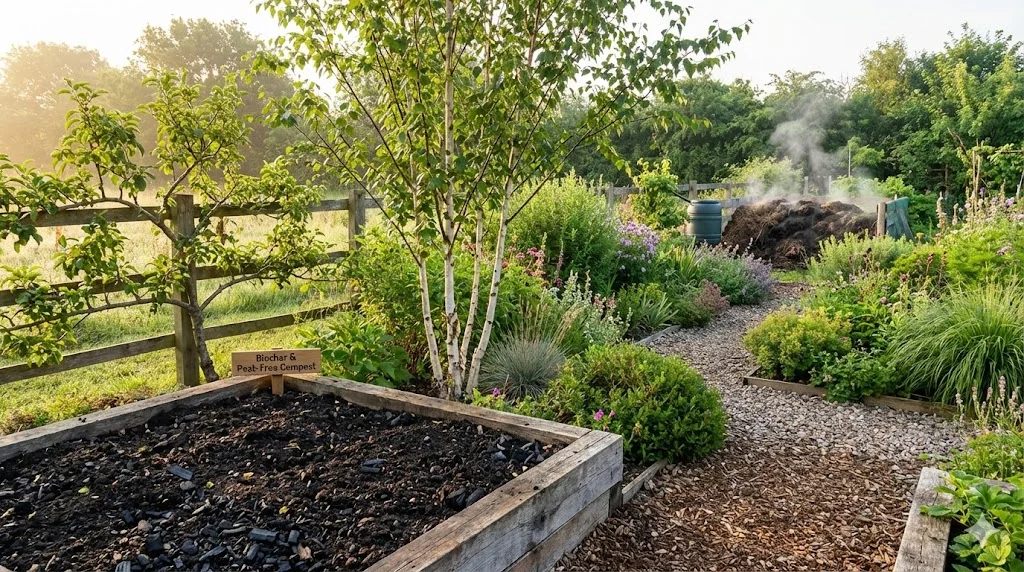
Carbon-Positive Garden Design: Sequestering Carbon at Home
Design a carbon-positive garden that sequesters carbon through tree planting, biochar, peat-free growing, reduced hardscape, and soil health strategies.
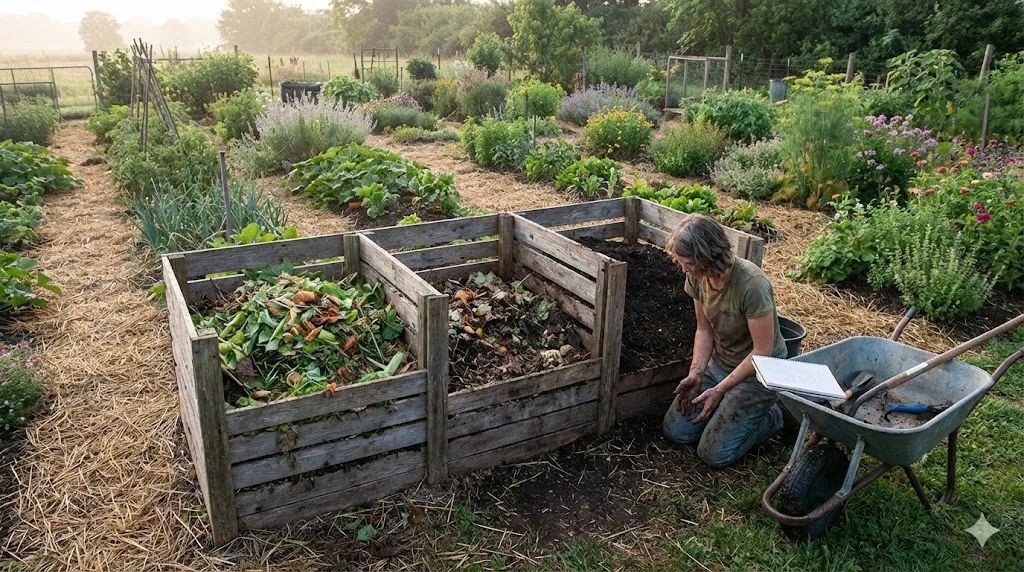
Composting and Soil Health for Garden Designers
Master composting and soil health for better garden design with guidance on the soil food web, composting methods, mulch types, no-dig gardening, and more.
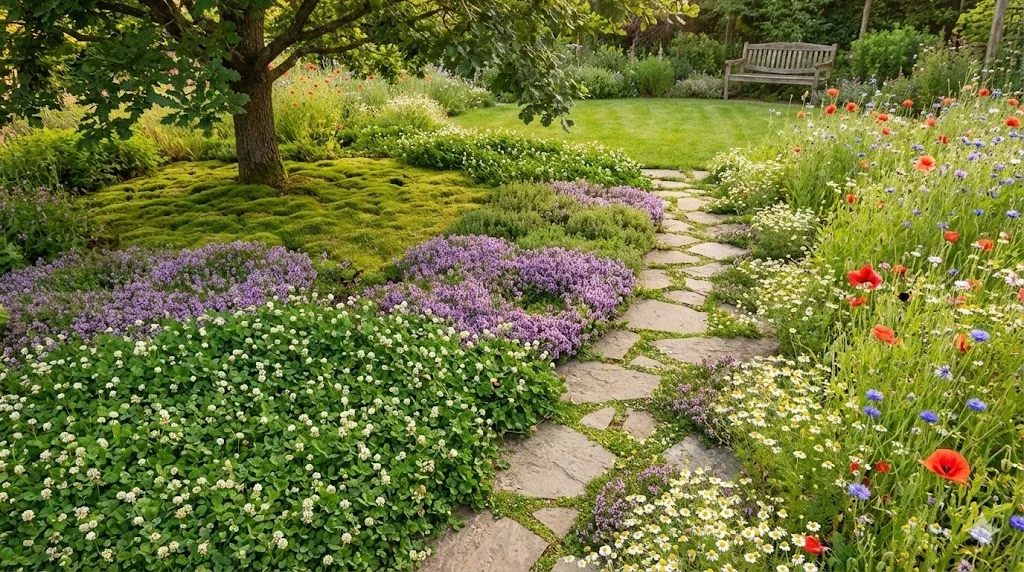
No-Mow Garden Design: Lawn Alternatives That Thrive
Explore no-mow garden design with lawn alternatives that thrive, including clover lawns, creeping thyme, moss gardens, meadow patches, and ground covers.